
A Big Step
“He also brought me up out of a horrible pit, out of he miry clay, and set my feet upon a rock, and established my steps.”
Psalm 40:2
I have reached a point in this journey where God is telling me to take a big leap of faith, a point every Christian will face eventually. I would be lying if I told you I wasn’t scared. I’m terrified. It’s one thing to step off the ledge when you can see the net below; it’s quite another when the net is nowhere in sight.
I have shared my concerns with two of my confidants, and they are so sure that this is the move God wants me to make, so sure that I have nothing to worry about. “Take the step,” they say. “God is going to make everything work out.” I wish I could share their confidence.
The Lord has been trying to relive my uneasiness for the last couple of weeks. Here are a couple of Scriptures He has given me.
“Do all that is in your heart, for God is with you” (1 Chronicles 17:2).
“So the Spirit lifted me up and took me away, and I went in bitterness, in the heat of my spirit; but the hand of the Lord was strong upon me” (Ezekiel 3:14).
Then just yesterday I read the stories of Abijah and Asa, two kings of Judah who, I confess, I had never heard of before.
By the time Abijah took the throne, Israel had been split into two kingdoms for some time, and they weren’t on friendly terms. War between the two kingdoms was inevitable, and forces from both nations made their way to the battlefield. Just before the hostilities commenced, Abijah addressed the armies, but Israel’s king, Jeroboam, wasn’t listening. He was too busy sending troops to the rear of Abijah’s lines, preparing an attack from two directions. When Abijah learned of this, he and his people “cried out to the Lord” (2 Chronicles 13:14).
We’ll probably talk more about crying out to God in the coming weeks; for now, all you need to know is after that cry, it was no contest. Judah routed Jeroboam’s army, and Israel lost any capacity to mount an attack against its neighbor. The writer of the book, believed by many to be Ezra, tells us they won the war “because they relied on the Lord God of their fathers” (13:18).
Asa, Abijah’s son, ascended to Judah’s throne after the death of his father, and for ten years the nation enjoyed peace. Then one day Zerah, a leader in Ethiopia, marched to Mareshah with one million troops in tow. Asa had to counter with only half that many, and things certainly looked bleak.
Like his father before him, Asa cried out to God. His prayer was simple: “Lord, it is nothing for You to help, whether with many or with those who have no power; help us, O Lord our God; for we rest on You, and in Your name we go against that multitude. You are our God; do not let man prevail against You!” (14:11).
In this prayer, according to Dr. David Jeremiah, Asa displayed four things: absolute confidence in God, absolute commitment to God, absolute courage, and absolute concern for God. Jeremiah says these are “the four basic elements of victory for every Christian.”
They certainly worked for Asa, as the prophet Azariah, another biblical figure of whom I was unfamiliar, explained. “‘The Lord is with you when you are with Him,’” he said. “‘If you seek Him, He will be found by you’” (2 Chronicles 15:2). He later added, “‘But you, be strong and do not let your hand be weak, for you work shall be rewarded!’” (15:7).
As an English teacher, the exclamation point at the end of that sentence did not go unnoticed, and I was sure this verse was intended for my instruction. God was telling me to be strong, even though it would be easier — and safer — to take another route. He was telling me that He will be there with me when I step out into the unknown and that my faith will be rewarded.
That’s a lesson Peter learned one early morning as the wind howled around him. As he and his comrades struggled to power their boat through the gales of Galilee, they saw Jesus walking on the water toward them. While the other disciples cowered, Peter asked if he could walk on the water, too. We all remember Peter sinking when he let his fear get the best of him; we must remember, too, that he walked on that water.
I have always identified with Peter, and this account has been one of my go-to passages when things get tough. Every time I read it, I see something different, so here’s what I learned this time (I hope you will remember this when you have to make your decision). Like Peter and the other disciples, Jesus has put me in this position. “Jesus made the disciples get into the boat and go before Him to the other side … “ (Matthew 14:22). Like Peter, I have asked the Lord to open doors and give me other opportunities. “And Peter … said, ‘Lord, if it is you, command me to come to you on the water’” (14:28). He has answered that prayer, and now, like he said to Peter, Jesus is telling me to step out of the boat. “So He said, ‘Come’” (14:29).
Abijah emerged victorious even though he was surrounded by the enemy. Asa won his battle despite being vastly outnumbered. Peter walked on that water. I can do that, too, and if I start to sink because of my fear, Jesus will reach down and pull me out of the waves. He wants me to walk on that water; He wants me to win the battle; and He wants me to step into the unknown. And He has assured me that as long as my eyes stay focused on Him, as long as I continue to cry out to the Lord, the net will be there, whether I can see it or not.
OK. Deep breath. That first step is a doozy.

Feed the Faith
“For we walk by faith, not by sight.”
2 Corinthians 5:7
While driving home from work recently, I felt a sense of dismay when my car radio began to go haywire. The gospel radio station I was listening to, which has taken over the top spot on my dial this past year, began to fade as some rap song tried really hard to drown out my inspirational tunes. The battle raged all the way to my front door.
The similarity to the battle going on in my mind couldn’t be ignored. I have struggled mightily lately, torn between believing that God will keep His promises and the flesh’s negativity that often overwhelms me, doubting that anything is going to happen because I don’t see immediate results. It all reminds me of a song by the group Petra: “Sometimes I feel like Jekyll and Hyde/Two men are fighting a war inside.”
What it boils down to, I guess, is faith. Faith is hard, especially when you have spent years giving in to those negative thoughts and especially when you have to wait for your expectations. You want to believe — and you really do — but there’s always that shadow that looms overhead. I continue to fight, though, and I suppose that’s part of what it takes to win this war.
Part of my battle plan recently has been reading as much as I can about faith, consulting as many sources as possible. My primary source, of course, is the Bible, and that’s where I found a biblical definition of faith. The writer of Hebrews calls it “… the substance of things hoped for, the evidence of things not seen” (11:1). Dr. David Jeremiah explains it this way: “Faith treats the things hoped for as a fact and places confidence today in what has been promised for the future. It is an absolute conviction … that God’s promises will be fulfilled.”
In his book, Courageous Faith: Life Lessons From Old Testament Heroes, Ed Hinson writes, “… faith — an act of trust by which we commit ourselves to someone or something. Faith is simply belief in the object of our trust.” Adrian Rogers expounds on this: “Your faith is no better than its object … It is not faith that moves mountains. It’s God that moves mountains.”
The same chapter of Hebrews lists a number of Old Testament greats who exhibited that faith in God. While they are certainly important role models, I am more drawn to some of the New Testament folks who displayed great faith.
The Centurion: This man, an officer in the Roman army and an occupier in Jewish territory, met Jesus at the outskirts of town and begged for the Lord to heal his paralyzed servant. Despite his disdain for the Jews, despite a lifetime spent worshiping many gods, this man recognized Jesus for who He was, and Jesus marveled, “‘Assuredly, I say to you, I have not found such great faith, not even in Israel!’” (Matthew 8:10).
The Woman with the Issue of Blood: This woman suffered from a blood condition that plagued her for a dozen years. She visited numerous doctors, who took all of her money but could do nothing to help her; in fact, her illness got worse. One day, Jesus came to town, and the woman knew that to be healed all she had to do was reach out and touch His robes. She fought her way through the crowd and touched the hem of his garment. Naturally, Jesus wasn’t going to leave it there. He confronted the woman, who spilled her whole story. I imagine Jesus smiled at her when He said, “‘Daughter, your faith has made you well. Go in peace, and be healed of your affliction’” (Mark 5:34).
Blind Bartimaeus: Much like the aforementioned woman, Bartimaeus met Jesus on the busy streets. A beggar in Jericho, Bartimaeus did not reach out to touch Jesus; he began shouting. And he wouldn’t stop shouting, even though others in the crowd tried to quiet him. Jesus heard. He called Bartimaeus to Him and after a brief conversation said, “‘Go your way; your faith has made you well’” (Mark 10:52).
These three people displayed that courageous faith we all should have. The Centurion risked severe punishment, perhaps even death. The woman, deemed unclean by the Jewish community, touched the Teacher and confessed her condition in front of a multitude. Bartimaeus kept calling out to Jesus, braving the wrath of those trying to silence him. Brave people all, and we should all strive to be like that.
The truth is, though, that many times we aren’t like them at all. Often we are Jekyll and Hyde, wanting so desperately to display that faith, to hold on to that faith, but too many times we succumb to those doubts and fears that emanate from the human side of us and cloud our faith.
We are like a certain man at the foot of a mountain, a man with a boy possessed by demons. We see his story in each of the first three Gospels, but Mark tells it best.
When Jesus descended from that mountain, where three of His disciples saw Him transfigured into all His glory. He ran into a ruckus as a group of religious leaders, and probably some of the lay people gathered around, accosted His other disciples. Jesus inquired about what sparked the hostilities, and the man explained his son’s problem and how the disciples were unable to help. The man pleaded with Jesus, and Jesus replied, “If you can believe, all things are possible to him who believes’” (Mark 9:23).
Jesus acknowledged that believing isn’t easy, and here is where I fit in. The man said, tears in his eyes and sobs wracking his voice, “‘Lord, I believe; help my unbelief!’” (9:24). How I resemble that remark! I believe; however, some nagging doubt, some random, unwanted thought, seems to creep in just when I seem on the verge of a breakthrough. Like this man, I need to start asking for help for my unbelief.
That part of this seemingly endless, sometimes extremely difficult process, isn’t it? C.S. Lewis tells us, “… there are a great many things that cannot be understood until you come a certain distance along the Christian road.” For me, faith fits into that category. I know I don’t understand it fully — and perhaps I never will — but it’s getting clearer.
It’s important to note that though this man did not have complete faith, an unwavering, doubt-free belief, he knew it, and he asked Jesus to help him increase that faith. Guess what Jesus did. He cast that demon out of the boy, and father and son walked home together, whole and happy for the first time in a long time.
Rogers said this man “had a weak faith, but it was weak faith in God.” It is far better to have strong faith, faith that is rooted in hope, but even weak faith can do wonders. In Matthew’s account of the man and his boy, Jesus tells His disciples, “‘… if you have faith as a mustard seed, you will say to this mountain, ‘move from here to there,’ and it will move; and nothing will be impossible for you” (17:20).
If your struggle for faith is real (I’m willing to bet it is; you are merely human, too), know that the Lord will be there to help with your unbelief. He can do that in a number of ways, and one of them is to put people in your life who can help you build that faith.
Mark illustrates this truth as well. Upon returning to Capernaum one day, Jesus set up shop in a local house, probably Peter’s, and began to teach. He attracted such a crowd that it became very difficult for anyone to get near, including a group who came to Jesus so that a paralyzed man could be healed. The crippled man’s friends would not be denied, however, and they made their way to the roof, creating a hole through which they could lower their friend in order to get him close to Jesus. Mark writes, “When Jesus saw their faith, He said to the paralytic, ‘Son, your sins are forgiven you’” (2:5).
We cannot help our unbelief by ourselves. We need Jesus to help us, and we need friends who will lower us through that roof when the way to Him seems crowded by those thoughts that block our faith. Be sure that you have those people in your life, people who will go to the greatest lengths to make sure you find your way to the Lord, even when your faith feels paralyzed.
In conclusion, while weak faith is still recognized by God, even faith as tiny as a mustard seed, it still leaves room for those doubts to arise. Our faith needs to continue to grow, to fill in those gaps. Later in that song Petra sings, “And the one I feed is the one who lives/The one I starve is the one who gives.” It’s time to start feeding the faith.

Coming Soon
“See that you are not troubled; for all these things must come to pass, but the end is not yet.”
Matthew 24:6
One day late in His ministry, Jesus sat on the Mount of Olives, a place to where He sometimes retreated to enjoy solace from the crowds that constantly followed Him and to enjoy the companionship of His friends (more to come on that in a couple of weeks).
I can imagine Him on this day, looking down on Jerusalem, that city He loved, that city He had just cried over, that city which would soon reject Him and allow Him to be crucified. As He stared, perhaps focusing on the golden dome of the Temple that towered over other buildings, the disciples gathered around. I can see some of them pushing one of their brethren forward, maybe Peter, who often acted as the leader of the group, urging him to ask the question.
It’s a question many continue to ask today, though it really cannot be answered. It’s a question that fills he who asks it with both anticipation and dread. Some don’t ever want to think about it, and I must admit that I have hesitated in engaging with this topic.
But that one curious disciple, though he and his peers still didn’t fully understand Jesus’ message about death and rebuilding temples, finally mustered up the courage to ask it. “‘Tell us, when will things be?’” he queried. “‘And what will be the sign of Your coming, and of the end of the age?’” (Matthew 24:3).
People have repeated that question many times since, and early Christians were convinced that Jesus, after His death, resurrection, and ascension into heaven, would return during their lifetimes. Every generation since has thought the same thing.
As Christians, we believe that not only did Jesus die for our sins and rise from the grave three days later, but also that He is going to return one day to take away His people as God brings tribulation to a wicked world. We call it the Rapture.
Isaiah hints at it: “It shall come to pass in that day that the Lord shall set His hand again the second time to recover the remnant of His people who are left …” (11:11). Paul says, “For the Lord Himself will descend from heaven with a shout, with the voice of an archangel, and with the trumpet of God. And the dead in Christ will rise first. Then we who are alive and remain shall be caught up together with them in the clouds to meet the Lord in the air” (1 Thessalonians 4:16-17).
There is no point in trying to figure out when this will happen. Jesus told His friends, “‘But of that day and hour no one knows, not even the angels of heaven, but My Father only’” (Matthew 24:36). We don’t know exactly when it will happen, nor should we try to figure it out (more on that shortly), but Jesus did give us some clues we can use to decipher when that time is approaching.
Jesus tells us that the days just before His return will be dark days indeed. He said, “‘But as the days of Noah were, so also will be the coming of the Son of Man be” (Matthew 24:37). During Noah’s time, “… the Lord saw that the wickedness of man was great in the earth, and that every intent of the thoughts of his heart was only evil continually. … The earth was corrupt before God, and the earth was filled with violence” (Genesis 6:5, 11). Riots, murders, unprovoked assaults … I think it’s safe to say that our world today sounds a lot like the world in which Noah lived.
Jesus did get a bit more specific, listing four other things that should be on our radars as we anticipate (or dread, depending upon your salvation status) that day. Some biblical scholars will tell you that the four things I’m about to reveal to you are signs of the Tribulation, that seven-year period that will terrorize the earth as the Antichrist sets up his reign. I’m not sure, but I am sure that these things will begin to manifest before the Rapture and will increase, becoming more and more frequent as the time for that trumpet to sound gets closer.
First, Jesus tells His disciples to “‘Take heed that no one deceives you. For many will come in My name, saying, ‘I am the Christ,’ and will deceive many’” (Matthew 24:4-5). Today, one really needs to thoroughly vet the celebrity “teachers” that pervade our airways and line our bookshelves. More than one of them have recently gone public in saying that Jesus isn’t the only way to salvation, lining their pockets with that “unrighteous mammon” (Luke 16:9) as millions continue to follow them, despite their doctrine that is counter to everything the Bible teaches. YouTube, which has some good things, but is often a cesspool like most social media outlets, is deluged with prophets, claiming to share words sent down by God. Some of them, I’m sure, are legitimate, but I’m also sure that some are the false prophets of which we have been warned. Each should be investigated, especially in today’s world when it is so hard to discern who is telling us the truth.
Did you know that right now there is a man in Brazil who claims he is the reincarnation of Jesus? Did you know that only two years ago, a prominent Israeli rabbi said that he was having meetings with the Messiah, who was going to shortly reveal himself? Yes, I know that there have been numerous false Christs over the centuries, even while Jesus was here and teaching, but they seem to be coming more and more frequently right now.
Jesus also warned his disciples that we would hear of wars and rumors of wars, the second on his list of signs. I realized not long ago that my son, who will celebrate his 21st birthday this summer (man, where does time go?), has only recently lived a few days when our country wasn’t involved in a conflict of some sort. How long is that going to last, however? With the recent events in Ukraine, I wonder if it will be long. According to worldpopulationreview.com, nearly 25 different countries are at war right now.
That number is only going to rise as, like Jesus prophesied, “nation will rise against nation, and kingdom against kingdom” (Matthew 24:7). Just think about the contentious relationships the United States has: Russia, China, Iran. And that’s just the major players. We don’t have enough time or space to mention the other diplomatic conflicts around the world; we are on the precipice of World War III, and most people don’t even realize it.
Finally, Jesus lumped three signs into one statement. He said that in the days before His return, “… there will be famines, pestilences, and earthquakes in various places” (24:7). Here are some headlines from the Associated Press over the last year: ‘Harrowing figures’: Yemen report says 161K to face famine; 150 starved to death in Ethiopia’s Tigray in August; UN warns hunger is expected to rise in 23 global hot spots. Some have estimated that 43 countries will be on the brink of famine this year. Pestilence: Covid19 anyone? And I think that’s just the beginning; more global diseases are on the way. Earthquakes: in just March of 2022, six earthquakes of 5.1 magnitude or higher have rocked the world. That includes the 7.3 quake that shook Japan on March 16. To be fair, there are hundreds of earthquakes around the globe every day, and there always have been. But if we are going to be honest, they are getting more severe. Six “significant” quakes in just a matter of weeks is a cause for concern.
It is indeed scary stuff. God’s word, however, is full of “buts.” Jesus lists all of these signs, ominous omens that might frighten even the most stout of heart, but He also tells us, “See that you are not troubled, for all these things must come to pass” (Matthew 24:6). Paul even says that we should embrace talk of the Rapture and the things that lead up to it and “Therefore comfort one another with these words” (1 Thessalonians 4:18).
If you are a child of God, if you are walking on the path that He has set before you, you should be comforted. You will be part of that group that rises up with the shout of the archangel; you won’t have to endure the terrors of the Tribulation. You don’t have to cower in the corner, trembling in fear at the horrors taking place all around you or spend all of your time poring over the prophecies to try to figure out exactly when Jesus will reappear to take his people away.
That will keep us from fulfilling our purpose, and, particularly right now, we should not be resting on our laurels. We should be excited that we have been placed in this time, getting to do the Lord’s work now, when Jesus’ return has never been closer. We have that assurance He has promised, and we should be doing all we can to make sure as many people as possible have that same assurance.
Dr. David Jeremiah said that we should not “speculate about dates; just anticipate the day. It’s not that complex,” he continued. “It’s actually as simple as this. If He might come tomorrow, we should be ready today! Give Him your life and be about His business!”
Jesus tells us the same thing. After revealing the signs, Jesus talks about two different types of servants. He emphasized the fact that a good servant, a faithful servant, doesn’t laze around, waiting for the master to come home. Instead, that servant goes about the business the master left for him. He said, “‘Blessed is that servant whom his master, when he comes, will find so doing’” (Matthew 24:46).
Finally, Peter wrote, “Therefore, beloved, looking forward to these things, be diligent to be found by Him in peace, without spot and blameless; …” (2 Peter 3:14). Christ’s return should be an event that we anticipate, with eagerness, and while we wait, we should be doing those things to which He has called us. We should make sure we are not idle.
Where do we find ourselves right now? Are we one of the group quaking at the things happening in this world? Are we like the evil servant in the story, who thought he could get away with things because the master has been gone for so long? I hope the answer is neither. I hope those of us who call ourselves Christians are all striving to be like the faithful servant. We don’t know when that day is coming, so we should be living like it will be tomorrow. We should be hard at work.
More than anything, I hope you are not part of the group that will be left behind when Jesus comes to take His people away. If you are, I pray that you will seek Him out … right now! He has an incredible gift to bestow upon you! Part of that gift comes with a shout and a trumpet. It’s important that you accept it, that “‘you also be ready, for the Son of Man is coming at an hour you do not expect” (Matthew 24:44).

The Name of God
“Look to Me and be saved, all you ends of the earth! For I am God, and there is no other.”
Isaiah 45:22
When I first thought about writing this blog, I envisioned this whole thing as a journey, a new walk. It has been a real struggle lately. I have experienced emotions I know are unhealthy and I’m sure have been detrimental to my progress. I have drifted to the side of the road, so to speak, and while I haven’t stepped off the path, I have thought about it.
I look down the road, and my Guide seems so far away. He’s still there, still talking, but I can barely hear Him sometimes. I call out to Him, but I don’t hear a reply. I wander aimlessly, it seems, and though I want to get back on track, I feel like I’m just groping in the dark.
I know what I’m supposed to do. I’m supposed to hit the Scriptures hard, for “[God’s] word is a lamp to my feet and a light for my path” (Psalm 119:105). I am supposed to do whatever I can to get closer to God, for, as James tells us, “Draw near to God, and He will draw near to you” (4:8).
I am supposed to keep calling out to Him. That’s what Abram did when he returned to an altar he built: “And there Abram called on the name of the Lord” (Genesis 13:4). I know that I should call on His name because “the Lord is near to all who call upon Him, to all who call upon Him in truth” (Psalm 145:18) and “The name of the Lord is a strong tower; the righteous run to it and are safe” (Proverbs 18:10).
If I am going to call out to Him, I thought, if I am going to try to draw closer to Him, I need to get to know who He is. If I am going to call on His name, I should know what it is.
While the Hebrew name is Yahweh, He is known by many others. During my study of the book of Psalms, I found that several of those names are illustrated in chapter 50. Let’s have a look at those names and exactly what they mean to us.
As the Psalm opens, we meet El Shaddai. “The Mighty One, God the Lord, …” (v. 1). That’s what El Shaddai means, “God Almighty.” How fortunate we are to have Him on our side! The angel told Mary, the mother of Jesus, “‘For with God nothing will be impossible,” (Luke 1:37), and Job said, “‘I know that You can do everything, and that no purpose of Yours can be withheld from You” (Job 42:2). He is God Almighty, El Shaddai.
Later in the psalm, Ashaph, David’s worship leader, says, “Out of Zion, the perfection of beauty, God will shine forth” (50:2). This is Jehovah-Nissi, “the Lord is My Banner.” He is the standard we carry before us as we enter battle – and believe me when I tell you that every day is a battle when you walk this path. We can take solace in the words Moses gave his people: “And the Lord, He is the One who goes before you. He will be with you. He will not leave you nor forsake you; do not fear nor be discouraged.” (Deuteronomy 31:8). We cannot win these battles by ourselves; it is reassuring to know that Jehovah-Nissi goes before us.
If you don’t mind, I’m going to skip ahead a few verses because I want to save the best for last. In verse 14, we are introduced to another name for the Lord. “Offer to God thanksgiving, and pay our vows to the Most High.” Here we meet El Elyon, “God Most High.” What does that mean? We’ve discussed before how His thoughts are higher than ours (see Isaiah 51:8-9), but it’s more than that. Asaph explains some of it: “For every beast of the forest is Mine, and the cattle on a thousand hills. I know all the birds of the mountains, and the wild beasts of the field are Mine” (Psalm 50:10-11). God is sovereign; He is the ruler over all He has created and all He surveys.
It sounds sort of scary, but as we read on, we see that his sovereignty is to our benefit. “Call upon Me in the day of trouble; I will deliver you, and you will glorify Me” (v. 15). This is Jehovah-Jireh, “the Lord Will Provide.” This is the side of God of which Jesus spoke when He said, “Now if God so clothes the grass of the field … will He not much more clothe you …? … But seek first the kingdom of God and His righteousness, and all these things will be added to you” (Matthew 6:30, 33). This is the side of God Paul described when he wrote, “And my God shall supply all your need according to His riches in glory by Christ Jesus” (Philippians 4:19). This is Jehovah-Jireh.
There are other names for God: Adonai (“The Lord and Master of Life”), Jehovah-Shalom (“The Lord is Peace”), Jehovah-Shammah (“The Lord is There”), El Hai (“The Living God”). All are comforting, even more comforting is Eloi, who we see in Psalm 50:7: “I am God, your God!” He is the Almighty, the Banner that goes before us, the Most High, the Provider. And He is ours. That’s what Eloi means, “My God.” He is all those things – and He’s mine … or I am His.
That’s what I need to keep telling myself. As I begin to feel lonely, as I wonder when prayers are going to be answered, as I start to stray, I cannot be like Thomas, who said before he saw the resurrected Jesus, “‘… I will not believe” (John 20:25). Instead I need to be like Thomas after that meeting, when he cried out, “My Lord and My God!” (20:28).
It is important that we as Christians remember what God told us. And if you are not following Him, have not accepted the gift of salvation, hear the words he spoke through one of His prophets: “Look to Me and be saved, all you ends of the earth! For I am God, and there is no other” (Isaiah 45:22).

Where are you, Lord?
“Draw near to God, and He will draw near to you.”
James 4:8
Over the last few months, I have written a number of blog posts, which I hope have encouraged and blessed some folks. That’s the main purpose of this, but at the same time, it is also very therapeutic. I sometimes write to try to figure things out, and sometimes it works. I have learned so much in these few months, and I have found many of the answers for which I have searched. There are times, however, I admittedly don’t always practice what I preach.
Jesus was so right when He told Peter, as the apostle slept in the garden while the Messiah prayed, “‘The spirit indeed is willing, but the flesh is weak’” (Matthew 26:41). I desperately want to apply the lessons I have learned; while I have been getting better, I still find myself succumbing to my fleshly thoughts. Have asked “why” and “when.” Lately, I have asked “where.”
I have been praying for a certain something for nearly a year now, but the resolution does not seem any closer than when I first started on this journey. The Spirit tells me that God has heard my prayers and that in his time, He is going to answer them. The flesh, however, tells me that because it is taking so long (at least in my mind), God has turned His back on me, thus my question, “Where are you, God?”
One night, after asking that question, I had a dream. In that dream, I was reading Psalm 10. I had no recollection of that particular chapter, so I had to go to it the next morning. I was not particularly surprised to find that the psalmist asked the same question: “Why do you stand afar off, O Lord? Why do you hide in times of trouble?” (v. 1).
Job, who suffered as much as any natural man, asked it, too. “O, that I knew where to find Him,” he cried (Job 23:3). Even Jesus, as he hung on that cross, making that ultimate sacrifice for us, begged for an answer to that question when He cried out, “My God, My God, why have You forsaken Me?” (Matt. 27:46). We already had the answer.
God is in your prison cell: “Now behold, an angel of the Lord stood by him, and a light shone on the prison; and he struck Peter on the side and raised him up, saying, ‘Arise quickly!’ And his chains fell off his hands” (Acts 12:7).
God is in your lions’ den: “My God sent His angel and shut the lions’ mouths, so that they have not hurt me …” (Daniel 6:21).
God is in your fiery furnace: “‘Look ! … I see four men loose, walking in the midst of the first, and they are not hurt, and the form of the fourth is like the Son of God’” (Daniel 3:25).
That’s what the Spirit tells me. The flesh tells me He is ignoring me. How do I tune out that voice? Why does it continue to seem like He is so far away?
In his Commentary on the Whole Bible (Hendrickson Publishing 2008), Matthew Henry explains, “God’s withdrawings are very grievous to [H]is people at any time, but especially in times of trouble. Outward deliverance is afar off and is hidden from us, and then we think that God is afar off … But that is our own fault: we judge by outward appearance; we stand afar off from God by our unbelief, and then we complain that God stands afar off from us” (602). OK. I get it. The flesh is weak. While that may explain why it seems God is distant, it does not tell me how to rectify that feeling.
The psalmist does, though. He writes, “Lord, you have heard the desire of the humble; You will prepare their heart;” (Psalm 10:17). Job’s friend Elihu explains it this way: “But no one says, ‘Where is God my Maker, who gives songs in the night, who teaches us more than the beasts of the earth, and makes us wiser than the birds of heaven” (Job 35:10-11).
In other words, prepare your heart and believe these things – that God is our Creator, that He gives us joy, understanding and wisdom – and you will not ask that dreaded question. As I read those verses, a light went on, but I still wondered what it means when God prepares our hearts.
Henry attempted to explain that, too. This is long, so bear with me:
“[God] first prepares the heart of his people and then gives them an answer of peace … so that God’s working upon us is the best earnest of his working for us. He prepares the heart for prayer by kindling holy desires, and strengthening our most holy faith, fixing the thoughts and raising the affections, and then he graciously accepts the prayer; he prepares the heart for mercy itself that is wanting and prayed for, makes us fit to receive it and use it well, and then gives in to us. The preparation of the heart is from the Lord, and we must seek unto him for it” (603).
Solomon put it this way: “The preparations of the heart belong to man, but the answer of the tongue is from the Lord” (Proverbs 16:1). We must remember what Paul told us: “Therefore we do not lose heart. Even though our outward man is perishing, yet the inward man is being renewed day by day” (2 Corinthians 4:16). We are growing, shedding our old selves and becoming the new creations through God’s grace; when we are ready, then God will answer.
Meanwhile, there are a few things we need to do. We must “Wait on the Lord, and keep His way, and He shall exalt [us] to inherit the earth” (Psalm 37:34). We must remember what Jesus told the crowd of Jews: “‘If you abide in My word, you are My disciples indeed. And you shall know the truth, and the truth shall make you free” (John 8:31-32). We must adhere to Jesus’ words delivered during the Sermon on the Mount: “Ask, and it will be given to you; seek, and you will find; knock and it will be opened to you. For everyone who asks receives, and he who seeks finds, and to him who knocks it will be opened” (Matthew 7:7-8).
That’s how we prepare our hearts. We seek the Lord, through prayers, Bible study, praise, worship, doing His good works. We do everything in our power to draw closer to Him. We have to identify potential sins in our lives, confess them, and leave them behind. We have to ready our hearts, so to speak, ready them to accept those gifts that God has promised to us.
In summary, we all at times feel like God has abandoned us, but that’s the flesh talking. He has promised that He will never forsake us, but sometimes we have to prepare our hearts to accept that promise and to receive answers to our prayers. When we do, we will realize that God never left us. Perhaps James said it best: “Draw near to God, and He will draw near to you” (4:8).

Hope
Romans 8:25 “But if we hope for what we do not see, we eagerly wait for it with perseverance.”
Jesus partially explained His mission on earth the day Zaccheus, the diminutive tax collector, shimmied up a sycamore tree in Jericho to try to catch a glimpse of the Messiah. Jesus said, “‘… the Son of Man has come to seek and save that which is lost’” (Luke 19:10).
When we accept the gift of God’s salvation, that becomes our mission as well, but we often don’t have to do much seeking. I’m sure we all have people in our lives, family members or friends, who are lost, so we pray in hope that the Lord will seek them out. And then we wait.
When nothing happens, at least that we can see, we pray some more. We fast and pray and pray and fast and mourn and scream. And then we wait. And we wait. And wait. And then we wait some more. We wait so long that we begin to think that nothing is ever going to happen. We wonder if God is even listening to us, if perhaps we have done something that has caused Him to turn a deaf ear to our pleas.
I have been struggling with all of these of late. A couple of weeks ago, after participating in a church-wide fast, I was feeling as good as I have for a long time. Then it happened.
I won’t go into details, but recent events led me to believe that all of my efforts were in vain. I was ready to just give up. I questioned if my salvation was genuine, and I was sure my efforts of intercession were in vain. “What’s the use?” I asked more than once.
Then God directed me to Mark’s Gospel and the writer’s take on a man named Jairus and that man’s daughter. You can read the whole story in Mark chapter five. In brief, Jairus, a leader in the synagogue, came to Jesus, seeking help for his sick daughter. When they arrived at the man’s house, the little girl was dead, but Jesus brought her back to life. This is a resurrection story, of course, and it helped raise me out of my temporary setback.
Let me explain how it did that by first looking at Jairus himself. As I read about the man, I realized that he was just like those of us who pray for other people who are unable or unwilling to pray for themselves. He was an intercessor, someone who, according to dictionary.com, “acts or interposes on behalf of someone in difficulty or trouble, as by pleading or petition.” That’s what we are doing when we plead for the lost in our lives, and if we don’t get results, perhaps we need to look at the way Jairus approached Jesus.
When we are first introduced to the man, Marks says, “And when he saw [Jesus], he fell at His feet, and begged him earnestly …” (5:22-23). Jairus humbled himself before Jesus. We need to do the same, getting down on our knees as we beg for the salvation of those for whom we are interceding. Paul calls it supplication, a humble prayer, and he mentions it at least twice in his letters. We see it in Ephesians, when he writes “… praying always with all prayer and supplication in the Spirit, being watchful to this end with all perseverance and supplication for all the saints –” (6:18). Paul says it again when he writes to the church at Philippi: “Be anxious for nothing, but in everything by prayer and supplication, with thanksgiving, let your requests be known to God” (Philippians 4:6).
What happened when Jairus bowed before the Lord? Jesus followed him to his house. Help was on the way.
It is important, I think, we deal with something right now. Jesus could have healed that girl right then and there, from a distance. He had done that before, when he healed the centurion’s servant. Jairus had to wait, though, and often so do we. I read in a recent devotional that “He can mend the breach, [but] restoration doesn’t happen overnight.” We may doubt. If we do, we need to remember Paul’s words; supplication must be accompanied by perseverance, a trait that must be developed in all Christians. We will explore how Jairus persevered shortly.
As the group approached Jairus’s house, some of his acquaintances intercepted them “‘Your daughter is dead,’” they said. “‘Why trouble the Teacher any further?’” (Mark 5:35).
Sound familiar? Most of us utter these words, or something very similar, throwing up our hands, ready to just give up. I certainly did when those events I glossed over earlier rose up in my life. Essentially those people, just like Satan, were trying to tell Jairus that there was no hope. That’s his plan. It’s an effective strategy, and many a prayer warrior has surrendered when hope seemed a long way off.
This is probably a good time to explore that word “hope.” We must understand the difference between our definition of it and the Lord’s. For us, hope is most often nothing more than a wish. “I hope I get a raise this year.” It would be nice, but we don’t really believe it is going to happen. God defines “hope” differently: “For we were saved in this hope, but hope that is seen is not hope; for why does one still hope for what he sees? But if we hope for what we do not see, we eagerly wait for it with perseverance” (Romans 8:24-25).
There’s that word “perseverance” again. Paul adds to that here. Hope, he says, is waiting for something with great anticipation. Hope is knowing that that thing is going to come to pass and having the wisdom to persevere in our prayers and developing that relationship with God as we wait for it. That’s hard, especially when the enemy is constantly hounding us with thoughts that are counter to that. How do we do it? Listen to Jesus.
Mark writes, “As soon as Jesus heard the word that was spoken, He said to the ruler of the synagogue, ‘Do not be afraid, only believe.’” (5:36). Jairus didn’t listen to the crowd and persevered as he continued to trudge toward his house, certainly wracked with grief at this point, with Jesus at his side. This is the message Jesus wanted me to receive when he directed me to this narrative. It is the message He wants you to hear today. Believe.
It’s easy for us to say we will do that, but in practice, at least for me, the king of pessimism, it is sometimes very difficult. I find it helps to remember what Jesus said about the enemy. “He was a murderer from the beginning, and does not stand in the truth, because there is no truth in him. When he speaks a lie, he speaks from his own resources, for he is a liar and the father of it’” (John 8:44).
Fortunately for Jairus, he listened to Jesus, and their procession continued to the house. When they arrived, the mourners had already taken up residence, weeping and wailing for the dead little girl. Then Jesus spoke again, saying, “‘Why make this commotion and weep? The child is not dead, but sleeping’” (Mark 5:39).
How does that apply to us? Well, for me it means that we don’t give up. Those people for whom we are pleading (with supplication, right?) aren’t beyond hope, even if it might seem that way. With God, remember, nothing is impossible; nothing is too hard for him, not even bringing in those lost souls that we think will be lost forever or raising 12-year-old girls from the dead.
Of course, those people will eventually make that decision for themselves, something we can’t control. But we can control our attitude toward the situation, remaining hopeful. There is reason to hope, and once again, Paul tells us all about it.
When he and Silas were jailed, and later freed by a sudden earthquake, one of their jailers asked how he could be saved. Paul explained, “‘Believe on the Lord Jesus Christ, and you will be saved, you and your household” (Acts 16:31). I think that means that if we are redeemed, then there’s a chance for our loved ones as well. Later, Paul wrote, “And do this, knowing the time, that now it is high time to awake out of sleep; for now our salvation is nearer than when we first believed” (Romans 13:11).
I sometimes wonder if this is wishful thinking on my part, but I choose, most of the time, to continue to hope. So did Jairus, and he let Jesus enter his house. As a result of his faith, one of, I think, the greatest displays of faith in the Bible, Jesus took his daughter’s hand and raised her out of that bed, alive and well. Jairus’ prayer and faith had been rewarded, and his daughter was saved.
But Jairus’ job wasn’t done. When his daughter was saved, Jesus instructed the man to give the girl something to eat. That’s our job, too. When (not if, but when) our loved ones are saved, we have to feed them. What does that mean?
Well, when He was tempted in the wilderness, Jesus told the devil, “‘It is written, ‘Man shall not live by bread alone, but by every word of God’” (Luke 4:4). He also tells us “I am the Bread of Life” (John 6:48), and the writer of Hebrews says, “… you need someone to teach you again the first principles of the oracles of God; you have come to need milk and not solid food” (5:12). In short, when those people we love are raised up from their death beds, we are to feed them the Word of God, guide them in the ways of the Lord.
That’s not so much to ask, is it? After all, we have begged and pleaded for their salvation; we ought to be willing to sustain them when it is delivered. That is part of my prayers now. I still ask God to convict those people for whom I am praying; I still plead with Him to bring them home. I also ask that when that happens, I am willing to be there to feed them.
I don’t know how long that will take. I don’t know how God is going to do it. But I hope, in the biblical sense. I choose to believe.

Overcoming Failure
“Though he fall, he shall not be utterly cast down; For the Lord upholds him with His hand.”
Psalm 37:24
It’s a new year, a chance for a fresh start and an opportunity to rectify all of the things that went wrong in the old one. Lord knows that a lot of things went wrong in 2021. But now it’s time for us to dust off those New Year resolutions and make ourselves and the world around us better.
You know what, though? Most of us will forget those resolutions within the first month. We are going to fail.
That’s something I know about. It seems like everything I touch falls apart; I fail on a daily basis. I fail myself; I fail my family; I fail the Lord. Yes, I truly know what Paul meant when he wrote, “… for all have sinned and fall short of the glory of God” (Romans 3:23). Believe me when I tell you that I constantly fall short.
David knew a little about failure, too. He had a great story to tell, a true rags to riches tale as he rose from a lowly shepherd boy to king of Israel. Along the way, though, he had his fair share of failures, most notably his affair with Bathsheba and the murder of her husband to cover it up.
While I haven’t failed to that extreme, I do wage a constant battle to rid myself of negative thoughts that hinder my spiritual growth. I do find myself in a state of perpetual doubt, and I spend too much time worrying about what I can do to resolve major issues in my life, rather than turning them over to the Lord. Those are just some of my failures, and I have a tough time dealing with them. Fortunately, David, that model for failure, laid out a blueprint we can follow with Psalm 37.
There are 40 verses in that chapter, dealing with things to remember when trying to handle failure. The first is how to avoid it; he lists six items.
First, “Trust in the Lord and do good;/Dwell in the land and feed on his faithfulness” (v. 3). I know, that’s easier said than done, especially when you are new to this Christiand life. But if we can remember God’s faithfulness, things He has done for us in the past, it becomes more manageable, or so they say.
It can even be little things. For example, because of our crazy work schedules here in the Floyd household, we were late in our Thanksgiving shopping, really late, and the only turkeys available were frozen birds, with no way to get them thawed properly. So, as I drove to the store Thanksgiving morning, I whispered a little prayer. I won’t go into details, but there was a turkey on the table that afternoon.
More recently, a similar thing happened. I drove around looking for cream cheese; my wife’s cheese cake, which rivals any available commercially, and the best creamed corn I have ever eaten require cream cheese, and quite a bit of it. Visits to three different grocery stores proved fruitless, so remembering the turkey, I whispered again. At my last stop, I dug through the refrigerators, and there in the back of the box lay five tubs of off-brand cream cheese, just enough to finish up the holiday baking. And do you know what? The cheesecake and corn were as good as ever.
On those two occasions, God proved to me that He is indeed Jehovah-Jireh, the Lord who provides. I thank him for turkey and cream cheese every day now.
David also tells us “Delight yourself also in the Lord” (v. 4). Delight is defined as “to take great pleasure.” If you are like me, you often spend your time wallowing in your own misery, and some of us, it seems, even enjoy it. I’m trying to get better at this, for walking with Jesus should be a journey of joy.
Third on David’s list is “Commit your way to the Lord” (v. 5). Dr. David Jeremiah, in his Study Bible, says, “Commit means to take the whole of one’s life and give it to God” (p. 730). We see this in Proverbs, when Solomon says, “Commit your works to the Lord, and your thoughts will be established” (16:3). In the New Testament, Peter writes, “Therefore humble yourselves under the mighty hand of God, that He may exalt you in due time, casting all your care upon Him, for He cares for you” (1 Peter 5:6-7).
In short, we have to give everything to God. That includes our careers, our fears, our thoughts, our lives, our families. EVERYTHING. He has to be at the center of it all.
The last three items on David’s list of things to do to avoid failure include: “Rest in the Lord, and wait patiently on Him” (v. 7); “Cease from anger and forsake wrath” (v. 8); and “Do not fret – it only causes harm” (v. 8). All are difficult, but no one ever promised this life would be easy.
One of the most difficult, for me at least, is the last. I worry about everything, but the reality is that most of our worries have no foundation. Here are some facts about worry, once again courtesy of Jeremiah: 40 percent of the things we worry about never happen; 30 percent of our worries are about things from the past; 10 percent of our worries are not based in fact; and only eight percent of our worries are realistic. This was true in 2013, and I suspect it’s still true today.
That’s why God tells us, “Be anxious for nothing, but in everything by prayer and supplication, with thanksgiving, let your requests be made known to God; and the peace of God, which surupasses all understanding, will guard your hearts and minds through Jesus Christ” (Philippians 4:6-7).
That peace, which I am slowly but surely beginning to experience, is just one of the rewards God will bestow upon us. David also outlines a number of other benefits available: 1) “… He shall give you the desires of your heart” (Psalm 37:4), provided they match up with God’s will, of course; 2) “… He shall bring it to pass” (v. 5); 3) “… He shall bring forth your righteousness as the light, and your justice as the noonday” (v. 6); 4) “… those blessed by Him shall inherit the earth (v. 22); 5) “… in the days of famine, they shall be satisfied” (v. 19); 6) “They are preserved forever” (v. 28); and 7) “… He shall exalt you” (v. 34).
The rewards are precious to be sure and give us reason to strive to adhere to David’s plan. But guess what. We are still going to fail. And God knows this. Look at verse 24: “Though he fall, he shall not be utterly cast down; for the Lord upholds him with His hand.” The antecedent for “he” in this verse is a good man, who is introduced in verse 23, but what’s important here is the word choice. David does not say if he fall. Instead he says though. Another way to put it is when. Failure is inevitable.
Several times throughout the chapter, however, David reminds us that God is there for us if we do. The last stanza says it best. “But the salvation of the righteous is from the Lord; He is their strength in the time of trouble. And the Lord shall help them and deliver them; He shall deliver them from the wicked and save them, because they trust in Him” (v. 39-40).
That does not give us license to live as we want; however, there is still a blueprint to follow. It does give us comfort, though. God is not going to give up on us; let’s not give up on ourselves.

A New Look at an Old Story
“For there is born to this day in the city of David a Savior, who is Christ the Lord.”
Luke 2:11
I have heard the story of Jesus’ birth hundreds of times in my life, and I can recite the angel’s announcement to the shepherds: “‘Born unto you this day in the city of David a Savior” (Luke 2:11). As we celebrate His birth this year, though, the story has taken on new meaning for me.
It means more, first because now He is my Savior. Because of that, I see things from a different perspective, and as I read the story again recently, I discovered things that I had never noticed before.
I could discuss any number of them, most of which are rehashed year after year in Sunday school classes and pulpits all over the world. I know there is nothing new under the sun, and somebody else has probably already noticed the things I see now. But they are new to me, and I just have to share.
Let’s start with Luke’s account of the Nativity. By the time we get to chapter two, we know that the angel has visited Mary and Joseph and told them of the events that were about to happen. In the very first verse of that chapter, Luke informs the reader that Caesar Augustus, the emperor in Rome, has declared a census. Everyone in the land must return to his hometown to be counted, and that meant Mary and Joseph were on their way to Bethlehem.
And with their journey came the fulfillment of one of the Old Testament prophecies. In his book, Micah wrote, “But you, Bethlehem …, though you are little among the thousands of Judah, yet out of you will come forth to Me the One to be Ruler in Israel, whose goings forth are from of old, from everlasting” (5:2). That is just one of a number of prophecies from ancient writers that was fulfilled that night behind the inn.
That’s not unexpected as we can see the fulfillment of those OT prophecies about Jesus throughout Scripture. What is unexpected is the way it was fulfilled. To understand this, let’s take a look at Caesar Augustus.
Born Gaius Julius Caesar Octavianus, Octavian for short, he was Julius Caesar’s nephew and was named heir in his uncle’s will. So when Julius Caesar was assassinated, and after a lengthy civil war, Octavian took over as emperor in Rome. While he was not nearly as morally bankrupt as his successors, like Tiberius, he was a pagan, a man who worshipped many gods and even, ironically in a way, called himself the “son of god” after Julius Caesar was posthumously dubbed Divius Julius, or Julius the God.
We can also assume that he was a prideful man; as ruler of the world, as he essentially was, it would be hard for any man, especially one who was raised in splendor like Octavian, to avoid that particular sin. So maybe it’s not a stretch to assume he called for this census as an effort to determine just how many people were under his power.
So here we have a pagan, full of pride and decadence. And while he thought he was doing something that was going to bring him glory, it instead worked out to fulfill God’s will. Matthew Henry, in his Commentary on the Whole Bible, said it like this: “See how man purposes and God disposes and how Providence orders all things for the fulfilling of the scripture, and makes use of the projects men have for serving their own purposes, quite beyond their intention, to serve his” (1456).
I find this fascinating. There is an old saying that goes something like “The Lord works in mysterious ways.” Whoever said that first had probably just read Romans 11:33, where Paul wrote, “Oh, the depth of the riches both of the wisdom and knowledge of God! How unsearchable are His judgments and His ways past finding out!” His using Caesar this way is a perfect example.
And it is a lesson we all should remember. The last several months, perhaps even the last couple of years, have been very difficult for me, mentally and spiritually. I have questioned God, gotten angry with Him, and even considered giving up completely, just walking off this path He has set before me and returning from whence I came. I have read Isaiah 55:8-9 (“‘For My thoughts are not your thoughts, nor are your ways My ways,’ says the Lord. ‘For as the heavens are higher than the earth, so are My ways higher than your ways, and My thoughts than your thoughts’”) over and over and even cited it in this blog several times. I never really took it to heart, however. I’m not sure I ever really truly believed.
Until now. As I sat at my kitchen table, pecking away at my keyboard on Christmas Eve morning, trying desperately to get out this blog before the Big Day, a feeling came over me that I have not felt before. Comfort? Yes, but it was so much more than that, a feeling that I just cannot put into words. It was a confirmation that I truly am a child of God (something I have doubted for the last few weeks) and that the Lord is working behind the scenes to do things I cannot possibly understand.
And it was the Christmas story – one that I have heard told countless times since childhood and one from which I never expected to glean such revelations – that showed me that. God is still using Caesar!
As we proceed in Luke 2, we see Jesus’ birth. You know how it goes: There was no room in the inn, so Mary and Joseph were relegated to the stable in the back of the place. Jesus was born there, wrapped in swaddling clothes and laid in a manger. But have you really thought about that?
Jesus’ birthplace came complete with all of the animals and the extras that come with them, including the smells and the things that animals leave behind. He was born in a barn. Talk about humble beginnings; the King of kings, the Lord of lords, the Prince of peace, He who could have, and possibly should have, been born in a palace took on his human likeness in a smelly, dirty stable.
He really had to though, didn’t He? If Jesus had been born in a palace, his message would have been vastly different. It would have been much harder for Him to speak of service and humbling oneself if He himself were royalty on earth. Therefore, “… being found in appearance as a man, He humbled Himself and became obedient to the point of death, even the death of the cross” (Philippians 2:8). Jesus was of humble birth in order to die a humble death for our sins.
At the same time, being born in a stable and laid in a manger, essentially a feeding trough for all of those animals, Jesus immediately took on His role of the Good Shepherd when He entered this world. If He wasn’t born where He was, would He be able to tell us “‘I am the good shepherd. The good shepherd gives His life for his sheep’” (John 10:11)? Without that humble birth, would He have been rejected by the religious leaders? Would He have been sentenced to die?
I don’t think so. Everything that leads us to salvation points back to the fact that our Lord was born in a barn.
The story of the Nativity is only told in two of the four Gospels. Matthew gives us the other account. His is not as detailed as Luke’s, but he does give us the narrative of the three wise men. While they are interesting characters, as are the gifts they brought the Child they dubbed “the King of the Jews,” more interesting to me right now is what brought them to Christ: the star.
Many people over the years have tried to explain the phenomena the Magi saw in the sky that night. Theories range from a comet to a supernova. One of the most plausible of all of them, I think, is the concept of a heliacal rising. Essentially, what happens is a planet appears in the sky just before sunrise and then disappears as the sun peeks over the horizon in the east, where our star first appeared. Michael Molnar, an astronomer, notes that Jupiter had just such a rising a year or two after Jesus’ birth (and we know from Matthew that Jesus was no longer a baby when the magi arrived), and he thinks that the wise men, who would have been adept astrologers, took that as a sign and followed the planet as it moved across the sky.
Does it really matter though? Not really, for when the wise men arrived in Jerusalem and met with King Herod, they asked him, “‘Where is He who has been born King of the Jews? For we have seen His star in the east and have come to worship Him.’” (Matthew 2:2).
Let’s look first at the question. Where is He? There is no doubt here, no qualifiers like We think He has been born, but … They don’t ask whether the King of the Jews has been born but where they can find Him. He is out there; of that they are certain.
We can be certain of this as well. The mere fact that Jesus checks the boxes of all of those OT prophecies, some 300 of them I read somewhere, should be enough; and some day, perhaps, we will delve into the archeological evidence and the literature that point to the existence of this man called Jesus. That people still talk about Jesus more than 2,000 years later must say something for his existence. Paul told Timothy, “And without controversy great is the mystery of godliness,” telling us without doubt that “God was manifested in the flesh” (1 Timothy 3:16), died on that cross and rose again.
Those mages from the east had faith enough to believe it. So should we.
The mages emphasized their surety that the King had come when they told Herod they had seen His star and were there to offer praise to Him.
His star. Whether it was a comet, one of the planets moving across the sky, or a miracle from God, that star belonged to Jesus. It was a light put there to lead these men from a far away land to the Child who would save the world. Jesus is that Light, placed in just the right place for us to see the way to the Him and the Father.
Once again, the Old Testament writers alluded to this. One of the psalmists wrote, “God is the Lord, and He has given us light …” (Psalm 118:27). Isaiah said, “Arise, shine; for our light has come! And the glory of the Lord is risen upon you” (60:1). In his Gospel, John continued the theme centuries later: “That was the true Light which gives light to every man coming into this world” (1:9). And Jesus Himself said, “‘I am the light of the world. He who follows Me shall not walk in darkness, but have the light of life” (John 8:12).
That leads me to my question for you. Will you come to that barn to worship Him? Are you walking in that darkness? If so, turn your eyes to the heavens; there is a star up there that will light your path. Follow it. You will find Jesus, and that Christmas story you have heard over and over again will take on new meaning.

You Are Important, Too
“But now indeed there are many members, yet one body.”
2 Corinthians 12:20
Those who know me will tell you that I am not the most coordinated person in the world. I constantly bump into things, knock objects over, and trip over my own feet. In polite vernacular, I am clumsy. To put it bluntly, I am a clutz.
If there is a way to mess things up, I usually find it. That’s probably where my self esteem issues originate. Maybe that’s why I prefer to stand in the shadows, silent but watchful, content to observe rather than become an active participant. I don’t know if that’s what professionals would label an inferiority complex, but I do know I have a tendency to be really hard on myself. “I’m not good enough,” I rationalize. “I’m just going to mess it up,” I whisper.
The Lord knows I have bungled plenty of things in my life, and some of those things I am still trying to rectify. That’s why I spent much of last week thinking really hard about the most recent blog I posted.
To recap, I wrote that we as Christians are all shepherds, called to watch over God’s sheep and to help lead them into the fold. The first witnesses to the glory of Jesus, other than His earthly parents, were shepherds, and we as believers in Christ are to follow their lead, proclaiming the good news throughout the land.
As I thought about that, reverting to my usual way of thinking, I also pondered this: Why would God want me to preach (we are going to come back to this word) His gospel? Why would I, a bumbling idiot, be chosen for such an important task? I’m just going to foul it up.
I should have known God wasn’t going to let me off that easily.
As I pored over devotions one early morning, I was given one centered around Luke 22:10, an innocuous little verse overlooked by most people who read the physician’s Gospel. “And He said to them, ‘Behold, when you have entered the city, a man will meet you carrying a pitcher of water; follow him into the house which he entered.’”
Those were Jesus’ instructions to Peter and John as he sent them to prepare the place for what would be their last meal together. What does it have to do with my apprehensions? Everything.
From the day I read that devotional, everything else I read seemed to point me in a certain direction. Take Matthew 10:6-8, for example: “‘But go rather to the lost sheep of the house of Israel. And as you go, preach, saying ‘the kingdom of heaven is at hand.’ Heal the sick, cleanse the lepers, raise the dead, cast out demons. Freely you have received, freely give.”
I must admit that much of what Jesus tells us to do in this verse is, I think, beyond me as I am still in the infant stages of this journey. It was the first part that caught my attention anyway. The first item on this list is preach.
I immediately tried to picture myself behind a pulpit, thumping the Bible as I spoke to a crowd of parishoners. The image made me uncomfortable, and I’m sure I visibly shuddered at the thought. I am not pastor material, as I mentioned last week.
Then, out of curiosity, I consulted Merrill F. Unger’s The New Unger’s Bible Dictionary (Moody Press 1988) to see how the good Mr. Unger defined “preach.” According to him, the verb is used eight different ways in the Bible, and only one of them deals specifically with standing in front of a crowd. One that really interested me is translated from the Hebrew word balar, which means “to be cheerful, joyful.” We can see it used this way in Isaiah: “The Spirit of the Lord God is upon me,/Because the Lord has anointed me/To preach good tidings to the poor” (61:1). We aren’t all equipped to be pastors; however, we can all be preachers in this sense.
And it doesn’t matter where we do it or in what manner we proclaim our faith. There are lots of different ways we can do that, even without talking at all. We are all given certain talents, and God wants us to use those talents to fulfill our mission. Maybe it is being a genuine, bonafide preacher, or maybe it’s being a writer. It could be working with your hands. Whatever the case, we all have a role.
Paul tells us as much when he talks about the body of Christ, and he made sure that we understand that the body is not just one person. He says, “For in fact the body is not one member but many” (1 Corinthians 12:14). He continues the analogy when he tells us it takes the entire body working together for it to function correctly. “And the eye cannot say to the hand, ‘I have no need of you’; nor again the head to the feet, ‘I have no need of you.’ No, much rather, those members of the body which seem to be weaker are necessary” (12:21-22).
In other words, the pastor is an important part of the body, but so are the people who clean up the church each week. The deacons are important parts of the body; so are those who greet folks at the front door. The missionaries in foreign lands are important parts of the body, as are the believers who speak about Jesus at the factory. The disciples were important, but so was the man carrying the pitcher of water.
Think about it. That man, anonymous and one of millions milling about Jerusalem during Passover, was selected to lead the disciples to the upper room. There was nothing overtly special about him, but he was one of those people working behind the scenes, ensuring that God’s will could be carried out.
I guess what I am saying is that it takes all of us, no matter how big or small the role, to complete the body. God chose you for a reason, and you, if you are truly part of the body of Christ, have an obligation.
Think about the last part of that verse from Matthew we talked about earlier. “Freely you have received, freely give.” We MUST deliver the goods, for “faith by itself, if it does not have works, is dead” (James 2:17). It’s a scary proposition sometimes, but remember this. It doesn’t matter if you are one of Jesus’ chosen 12 or just an ordinary man carrying a pitcher of water. You are part of the plan, and you are important.

“Tend My Sheep”
“And I will give you shepherds according to My heart, who will feed you with knowledge and understanding.”
Jeremiah 3:15
One of the things I have wondered about over the last several months is my purpose. Now that I have embarked on this walk with Jesus, what is it He wants me to do?
This blog is obviously part of that plan, or else He wouldn’t allow me to keep writing it. It’s funny. Years ago, I used to write a column for a local newspaper, and I often stressed over coming up with a topic each week. I don’t stress about that now. I always think I am going to struggle with finding a subject, and for the longest time this week, I was unsure. In fact, late Saturday night, this week’s edition morphed into what you are about to read. God steered me to this.
So, I’m sure writing is part of the plan, but is that my ultimate purpose? I think it’s more than that. This writing and any future endeavors in that field have the same purpose that is at work in all of our lives.
We come from vastly different backgrounds. We have very different talents. But we all have the same mission when we choose to walk with Jesus.
Just before He ascended to heaven, Jesus told His disciples, “‘Go therefore and make disciples of all the nations, baptizing them in the name of the Father, and of the Son, and of the Holy Spirit, teaching them to observe all things that I have commanded you” (Matthew 28:19-20). As we have discussed before, this is The Great Commission, and it wasn’t directed at just those people who gathered on that mount that day and watched Jesus rise into glory. It’s directed to all of us who choose Him.
Here’s the problem. Those nations, synonymous with the unsaved, are spread out all over the world. They are lost and often quite hard to find.
At one point, as he traveled through Galilee, Jesus looked out at the large groups of people that tagged along with Him. It made Him sad, and “moved with compassion for them, because they were weary and scattered, like sheep having no shepherd” (Matthew 9:36).
That’s a common analogy used throughout Scripture. Micaiah alluded to it as he spoke to the king: “‘I saw all Israel scattered on the mountains, as sheep that have no shepherd” (2 Chronicles 18:16). Zechariah prophesied: “… the people wend their way like sheep; they are in trouble because there is no shepherd” (Zechariah 10:2). Finally, God said, “‘… My flock was scattered over the whole face of the earth, and no one was seeking or searching for them” (Ezekiel 34:6).
So, who do you think is supposed to be searching for those scattered sheep, rounding them up and bringing them into the fold? We are, of course.
After His resurrection, Jesus appeared to a group of His disciples while they were fishing. Among them was Peter, who just a few nights earlier had denied even knowing Jesus. While they ate breakfast, Jesus took the opportunity to restore Peter to his proper place. Three times He asked Peter if he loved Him, and after each affirmative response, Jesus said, in succession, “‘Feed my lambs,’ (John 21:15), ‘Tend my sheep’ (21:16), and ‘Feed my sheep’” (21:17).
Jeremiah says, “And I will give you shepherds according to my heart,who will feed you with knowledge and understanding” (Jeremiah 3:15). In one of his sermons, Paul said, “‘Therefore take heed to yourselves and all of the flock, among which the Holy Spirit has made you overseers, to shepherd the church of God which He purchased with His own blood” (Acts 20:28). And Peter, who was charged by Jesus Himself to “Feed my lambs,” wrote, “Shepherd the flock of God which is among you, … being examples to the flock; and when the Chief Shepherd appears, you will receive the crown of glory that does not fade away” (1 Peter 5:2-4).
When I think of shepherding the flock in the biblical sense, I immediately think of pastors, those tireless souls who lead the churches, often at great sacrifice that I don’t think many of us realize. However, becoming a shepherd does not mean one must earn a seminary degree and become a leader of a church. I know I’m not cut out for that. My organizational skills leave much to be desired; I am not very good with money; and I am not what one would call a people person. I am definitely not pastor material, yet I still feel that I am meant to be a shepherd.
The Hebrew word for shepherd is rō’ eh meaning “one who tends.” According to The New Unger’s Bible Dictionary, there were two types of shepherds. One group “resided in towns and tended flocks in nearby meadows” (1180). Those shepherds, as I see it, are our pastors. The other group was “nomadic and migrated to new pastures and sources of water” (1180). That’s the rest of us, seeking and gathering up the lost sheep as we navigate life.
Unger goes on to tell us that being a shepherd required calling out to the sheep, watching over them in the pasture, searching for strays until he found them, providing them with water, and making sure none of them were missing. Being a shepherd required two traits that all of us as Christians should exhibit: “great watchfulness … [and] tenderness toward the young and feeble” (1179).
I don’t believe it’s a stretch to say that sounds very similar to the Great Commission. Still not convinced? Let’s take a look at Luke, chapter two, which most of us are reading during this season anyway.
It’s night, and a strange, beautiful star shines over the quiet village of Bethlehem. Suddenly, the sky is afire, and a host of angels appears from nowhere. One of them says, “‘… I bring you good tidings of great joy which will be to all people. For there is born to you this day in the city of David a Savior, who is Christ the Lord” (Luke 2:10-11).
To whom did these angels appear? Not the three wise men who were following that star. Not to Herod, the Roman-appointed tetrarch who would soon order the slaughter of innocent children in an effort to protect his throne. Not the church leaders, who would go on to reject Jesus. No. They appeared to shepherds, out in the dark night watching over their sheep: lowly shepherds, dirty and smelly shepherds.
When they received the news, the shepherds did three things, modeling the way all of us should react when we hear the gospel of Jesus Christ. First, “… they came to Mary and Joseph and the Babe lying in a manger” (Luke 2:16). Then “… when they had seen Him, they made widely known the saying which was was told them concerning this Child” (2:17). Finally, “… the shepherds returned, glorifying and praising God for all the things that they had heard and seen …” (2:20).
Let’s review. When they heard the news, the shepherds rushed to Bethlehem to get a glimpse of the newborn Messiah, just like we as Christians rush to Jesus for His salvation when we believe what we have heard. The shepherds then spread the news, and then they gave praise to God for what they had received. That’s the pattern we should follow, but what I want to emphasize here is the fact that the very first people to spread the news about Jesus were those lowly shepherds, dirty and smelly, just like us. We are those shepherds.
So let me say it now. Thank you Father, for allowing me to be one of your shepherds, for giving me the opportunity to spread the news about your Son, Jesus Christ, and the salvation He offers us. All the glory and honor be to You.
As a shepherd, I must offer this as well. Are you one of those lost sheep, shivering and frightened in this cold, dark world? The fold is open and know this: The Good Shepherd, Jesus, “will feed His flock like a shepherd; He will gather the lambs with His arm and carry them in His bosom” (Isaiah 40:16). He’s inviting you to join the flock; will you come with him?

Death, Where is Thy Sting?
“For as in Adam, all die, even so in Christ, all shall be made alive.”
1 Corinthians 15:22
The topic of conversation at the front desk at the high school where I work was a morbid one earlier this week. It concerned an overwhelming number of people in our small town who have died recently, and when I thought about that, I realized the number was quite high, along with the number of family members mourning loved ones.
As I continued to mull that over as the week progressed, I thought about my mother’s passing, a hard-to-believe four years ago now. I never grieved her properly. Oh, there was plenty of guilt, guilt for not doing enough to help her and guilt for feeling more relief than sorrow when she died that summer morning. The problem is I don’t know if the feeling of relief was more for me or her. Relief? Yes. Mourning? Not really, except for a few scattered tears when they closed the lid on the coffin.
I don’t know if that’s the right way to mourn; I don’t know if there is a right way. You are going to hear me repeat that over the next few paragraphs. When it comes to death, I don’t have many answers. None of us do. I do know that Jesus cried when His friend Lazarus died (before He brought him back to life, that is), so I guess crying is OK.
I think, though, that crying is only therapeutic if we remember that God is here to comfort us, and we allow Him to do just that. When Jesus gave his first big sermon, the Sermon on the Mount, and began with what we call The Beatitudes, number two on the list was this: “‘Blessed are those who mourn,/For they shall be comforted’” (Matthew 5:4). So Jesus recognized the need for us to mourn, and He gave it pretty high priority in a pretty important speech.
He also recognized the need for God’s comfort, however. In fact, that very topic is sprinkled throughout the Bible. The most memorable, of course, is David’s 23rd Psalm: “Yea, though I walk through the valley of the shadow of death, I will fear no evil; for You are with me; Your rod and Your staff, they comfort me” (v. 4). Isaiah knew it, too, when he recited God’s words: “When you pass through the waters, I will be with you; And through the rivers, they shall not overflow you. When you walk through the fire, you shall not be burned, nor shall the fire scorch you” (43:8).
So, in the immortal words of ZZ Top, “If you feel like crying, go ahead and cry.” But don’t let the tears consume you, like so many do. Accept God’s comfort.
What comfort, you ask? Well, we’ll get to that shortly. First, we have to address another question, one that we all ask. Why?
When I was a lad, my cousin tragically died when a car struck the bike he was riding. He was nine years old. I’m sure all of the adults in my family, most who were good Christian people, asked that question. I know I did, and I was just just a punk kid. It didn’t make any sense. What purpose did it serve? My answer then: I don’t know.
And that’s my answer today. All I know is “To everything there is a season, a time for every purpose under heaven: A time to be born, and a time to die” (Ecclesiastes 3:1-2). It’s a part of life, and if we try to figure it out, even if it happens to a nine-year-old boy, we risk driving ourselves into a deeper funk. Some things are just beyond our comprehension.
Let’s ponder this briefly. In his latest book, You Were Made for This Moment, Max Lucado writes, “Your problem is not that your problem is so big but that your view of God is so small.” He adds – and I love this – “Do we understand that demons fear and flee at the sound of [H]is name? That angels have been singing ‘holy, holy, holy’ since creation and still haven’t sung it enough? That a glimpse of God’s glory caused Isaiah, the prophet, to beg for grace and Moses, the patriarch, to duck under the protection of a rock? Do we comprehend [H]is grandeur? [H]is glory, fire, and power?” (156).
That answer, quite often, is no. I know I’m guilty as I find myself struggling daily to decipher God’s plans and what He has working in my life. It’s a futile endeavor, and daily I get frustrated and ask that silly little question: Why? With our feeble human minds, we can never figure out what God is up to, and He tells us as much. “For as the heavens are higher than the earth,/So are My ways higher than your ways,/And My thoughts higher than your thoughts” (Isaiah 55:8).
We cannot possibly understand. That’s why it is so important to rely on His comfort to get us through times when things just don’t make any sense.
Yes, I know it’s hard to fathom comfort in death. One of the psalmists writes, “Precious in the sight of the Lord/Is the death of His saints” (116:15). Hundreds of years later, John received a vision that said basically the same thing, and in this vision, “says the Spirit, ‘Yes, that they may rest from their labors, and their works follow them” (Revelation 14:14).
That’s the comfort our Christian friends, brothers and sisters … mothers … have been granted. It’s also the comfort we should take from God when we lose one of those saints.
On the day my mother died, I arrived at the house after the EMTs, only to see her all but lifeless body stretched out on the floor, a contraption, working frantically to get her heart going again, strapped to her chest. Before that, she spent most of her days self-sequestered to the couch, head down, weak and trembling. She had become a shell of the woman she once was, and for the longest time those were the only images I could remember of her. Not anymore.
Now that I have chosen this walk with Jesus, I see her in that place where “eye has not seen, nor ear heard … the things which God has prepared for those who love Him” (2 Corinthians 9:9). I see her ambling among the mansions Jesus promised and wearing the crown of righteousness Paul described to Timothy, not those Coke-bottle glasses she wore for most of her life. She is whole again.
Even more comforting is that my family and I will see her again some day. Scripture promises “For God did not appoint us to wrath, but to obtain salvation through our Lord Jesus Christ, who died for us, that whether we wake or sleep, we should live (my emphasis) together with HIm” (1 Thessalonians 5:9-10). And Jesus said, “‘… if I go to prepare a place for you, I will come again and receive you to Myself, that where I am, there you may be also” (John 14:3).
In other words, if we accept Jesus as our Savior, we become one of the saints and the same promises given to them are available to us. We will get to walk among the mansions and put on one of those fancy crowns, too. One need only accept the gift God has offered – salvation through His son Jesus Christ.
Jesus knows all about death. When He came to earth, He suffered one of the most vile and cruel deaths ever visited on man in His crucifixion, an event that is documented by a number of secular sources as well. He took on our sins and defeated death with His resurrection, and not just His death, but ours also. We just have to believe.
We must recognize that “… all have sinned and fall short of the glory of God” (Romans 3:23), including all of us. We must come to terms with the fact that “the wages of sin is death” but realize “the gift of God is life in Christ Jesus our Lord” (6:23). We must know that God loves us so much that “He gave His only begotten Son, that whoever believes in Him shall not perish but have everlasting life” (John 3:16). We must believe Jesus when He said of Himself, “‘… the Son of Man has come to seek and save that which is lost” (Luke 19:10), and we must trust “… that if you confess with your mouth the Lord Jesus and believe in your heart that God has raised Him from the dead, you will be saved” (Romans 10:9).
That means confessing your sins, too, and asking forgiveness for them. When you do, you will understand why Paul said, “So when this corruptible has put on incorruption, and this mortal has put on immortality, then shall be brought to pass that saying that is written: ‘Death is swallowed up in victory! O Death, where is your sting? O Hades, where is your victory?’ (1 Corinthians 15:54-55).
John Donne must have had this in mind when he penned his poem “Death Be Not Proud.” And we should keep it in mind when we suffer the pains of losing someone close to us. Mourn, but, as contrary as this sounds, remember that for those who abide in God, death is just a transferral into a better life. “For as in Adam all die, even so in Christ all shall be made alive” (1 Corinthians 15:22).
The choice is yours.

Giving Thanks
“Let us come before His presence with thanksgiving;/Let us shout joyfully to Him with praise.”
Psalm 95:2
It’s the holiday season here, and the excess will kick off Thursday when we celebrate Thanksgiving, a holiday, I’m afraid, that has become more about stuffing our faces than truly giving thanks. It’s a long way from what it was originally intended to be.
But, you know, sometimes it’s hard to be thankful. We look at the world around us, and it’s hard to see anything but the trouble and strife. We wait; we worry; and we wonder when those blessings are going to come and why they are taking so long to arrive. We might focus on the things that are not happening in our lives and wonder if there is truly anything for which to be thankful.
David was a man beset by troubles, some of them self-inflicted, to be sure, yet he recognized the importance of thanking God. In Psalm 26, he wrote, “That I may proclaim with the voice of thanksgiving,/And tell of all Your wondrous works” (v. 7). Other psalmists echoed his sentiment, and one challenged us to “Enter into His gates with thanksgiving,/And into His courts with praise./Be thankful to Him and bless His name” (100:4).
The message here is that as children of God, we are to be thankful to Him for everything, not just when the holidays demand it but every day. We need to thank Him every time we pray, and every time we draw another breath (which isn’t guaranteed, by the way), words of thanksgiving should be on our lips. I forget this often. So absorbed in myself and my problems, I neglect to thank the Lord for the things He has already given me.
I tried to rectify that this week. My nightly prayers have been those giving thanks to God, and I compiled a list of 20 things for which I am thankful. Though that list could have been much longer, here it is, in no particular order, with Scripture references to illustrate each point. Please take the time to read over it. If you are already a Christian, make sure you thank God for these things tonight. If you aren’t, you are missing out! But God wants to share these promises with you as well. Come to Him. Confess your sins and recognize that His Son, Jesus, died so that we might live, and you too can give Him thanks.
1. God is Good.
“Every good gift and every perfect gift is from above, and comes down from the Father of lights, with whom there is no variation or shadow of turning” (James 1:17).
“And we know that all things work together for good to those who love God, to those who are called according to His purpose” (Romans 8:28).
2. God Loves Us.
“For God so loved the world that He gave His only begotten Son, that whoever believes in Him should not perish but have everlasting life” (John 3:16).
“We love Him because He first loved us” (1 John 4:19).
3. God Will Help Us.
“… for the Lord God is He who fights for you, as He promised you” (Joshua 23:10).
“For I, the Lord your God, will hold your right hand,/saying to you, ‘Fear not, I will help you.’” (Isaiah 41:13).
4. God Will Comfort Us.
“He will swallow up death forever,/And the Lord God will wipe away tears from all faces” (Isaiah 25:8).
“Be anxious for nothing, but in everything by prayer and supplication, with thanksgiving, let your requests be known to God …” (Philippians 4:6).
5. God Mends Broken Hearts
“The Lord is near to those who have a broken heart,/And saves such as have a contrite spirit” (Psalm 34:18).
“He heals the brokenhearted/And binds up their wounds” (Psalm 147:3).
6. God Provides for Us.
“Look at the birds of the air, for they neither sow nor reap nor gather into barns; yet your heavenly Father feeds them. Are you not of more value than they?” (Mattew 6:26).
7. God Gives Us Peace.
“Peace I leave with you, My peace I give to you; … Let not your heart be troubled, neither let it be afraid” (John 14:27).
“For God has not given us a spirit of fear, but of power and of love and of a sound mind” (2 Timothy 1:7).
8. God Gives Us Hope.
“For I know the thoughts I think toward you, says the Lord, thoughts of peace and not of evil, to give you a future and a hope” (Jeremiah 29:11).
9. God is Always with Us.
“Yea though I walk through the valley of the shadow of death,/I will fear no evil;/For You are with me;/Your rod and Your staff, they comfort me” (Psalm 23:4).
“‘I will not leave you orphans; I will come to you’” (John 14:18).
10. God Answers Prayer.
“And whatever things you ask in prayer, believing, you will receive” (Matthew 21:22).
11. God is Eternal.
“Before the mountains were brought forth,/Or ever You had formed the earth and the world,/Even from everlasting to everlasting, You are God” (Psalm 90:2).
“Jesus Christ is the same yesterday, today, and forever” (Hebrews 13:8).
12. God is in Control.
“Behold, I am the Lord, the God of all flesh. Is there anything too hard for me?” (Jeremiah 32:27).
“‘In the world you will have tribulation; but be of good cheer, I have overcome the world” (John 16:33).
13. God Grants Us Grace.
“… But where sin abounded, grace abounded much more, so that as sin reigned in death, even so grace might reign through righteousness to eternal life through Jesus Christ our Lord” (Romans 5:20-21).
“For by grace you have been saved through faith, and that not of yourselves; it is the gift of God” (Ephesians 2:8).
14. God Will Forgive Us.
“If we confess our sins, He is faithful and just to forgive our sins and to cleanse us from all unrighteousness” (1 John 1:9).
“‘And she will bring forth a Son, and you shall call His name Jesus, for He will save His people from their sins” (Matthew 1:21).
15. God Wants to Save All of Us …
“For this is good and acceptable in the sight of God our Savior, who desires all men to be saved and to come to the knowledge of the truth” (1 Timothy 2:3-4).
16 … Including Those Close to Us.
“‘Believe on the Lord Jesus Christ, and you will be saved, you and your household’” (Acts 16:31).
17. God Transforms Us.
“Therefore, if anyone is in Christ, he is a new creation; old things have passed away; behold, all things have become new” (2 Corinthians 5:17).
“… being confident of this very thing, that He who has begun a good work in you will complete it until the day of Jesus Christ;” (Philippians 1:6).
18. Jesus is Preparing a Place for Us.
“Eye has not seen, nor ear heard,/… the things which God has prepared for those who love Him” (1 Corinthians 2:9).
“‘I go to prepare a place for you. And if I go and prepare a place for you, I will come again and receive you to myself; that where I am, there you may be also” (John 14:2-3).
19. Jesus Suffered and Died for Us.
“And being found in appearance as a man, He humbled Himself and became obedient to the point of death, even the death of the cross” (Philippians 2:8).
“But He was wounded for our transgressions,/He was bruised for our iniquities;/The chastisement for our peace was upon Him,/And by His stripes we are healed” (Isaiah 53:5).
20. Jesus Will Return.
“‘This same Jesus, who was taken up from you into heaven, will some come in like manner as you saw Him go into heaven” (Acts 1:11).
“For the Lord Himself will descend from heaven with a shout, with the voice of an archangel, and with the trumpet of God. And the dead in Christ will rise first. Then we who are alive and remain shall be caught up together with them in the clouds to meet the Lord in the air” (1 Thessalonians 4:16-17).

Stumbling Blocks
“But I want you to know, brethren, that the things which happened to me have actually turned out for the furtherance of the gospel, …”
Philippians 1:12
He knows.
He probably even expects it.
He’s going to use it.
I know that probably doesn’t make much sense, so let me backtrack a little bit. I have been doing a great deal of reading about the apostle Peter lately, and I discovered something. From the moment the one-time fisherman said, “‘You are the Christ, the Son of the living God,’” (Matthew 16:16) in response to Jesus’ question “‘But who do you say I am?’” (16:15), things seemed to fall apart for him.
Peter was the impulsive sort, often leaping before he looked or opening his mouth before he thought. Not five minutes after his confession, Jesus called Peter Satan, rebuking the man for daring to try to talk Him out of what was to come. Peter couldn’t keep his mouth shut when he blurted out an absurdity on the Mount of Transfiguration. Peter impulsively cut off a man’s ear, and, of course, he denied Jesus three times on the night He was arrested. To say Peter stumbled would be an understatement.
I understand. I had my own Peter moment this week, an open-mouth, insert-foot instance that I know was in direct contrast to what God wants me to do. I immediately begged forgiveness, but I was so afraid that I had thrown a monkey wrench into God’s plan for me (Silly, huh? We will see just how silly shortly). So I did what I always do when I have doubts: I hit the Bible, and the Lord showed me a few things.
First, He knew that I was going to screw up. Jesus told His disciples, as they were eating their last meal together, “‘All of you will be made to stumble because of Me on this night …” (26:31). James echoed that sentiment in his letter when he wrote, “For we all stumble in many things. If anyone does not stumble in word, he is a perfect man …” (James 3:2).
The thing to remember, and this was a hard lesson for Peter to learn, as it is for most of us, is that we are not perfect. We are works in progress, “… being transformed into the same image from glory to glory, just as by the Spirit of the Lord” (2 Corinthians 3:18). We must understand that the path we as Christians have chosen is full of pitfalls, and we are going to succumb to them every now and then (hopefully more irregularly as we grow in the Lord and continue to seek Him). We must comprehend the fact that since we have chosen this direction, an arduous journey, one that is wearisome, the enemy, Satan, is going to do everything in his power to lead us astray, including trying to convince us that our mistakes have caused a fall from grace.
God knows this, and He even expects it. If we go back to the Old Testament, we can find Nehemiah, leading the reconstruction of the walls around Jerusalem. It was a chore, and one day, Judah, one of the leaders on the project, told Nehemiah, “‘The strength of the laborers is failing, and there is so much rubbish that we are not able to build the wall” (Nehemiah 4:10). So what happened? Their “adversaries” saw this and immediately began planning an attack. Dr. David Jeremiah put it this way: “The strategy of the adversary has not changed: he comes when God’s servants are weary, tempting and discouraging them in hopes that they will give up” (The Jeremiah Study Bible 628).
That’s discouraging. But Jeremiah added, “But this is when Yahweh steps in and strengthens His people” (628). You see, God expects us to stumble, and He expects the enemy to pounce.
Let’s return to the upper room and the last Supper. At one point, Jesus turned to Peter, again. “‘Simon, Simon!’” he said, invoking the disciple’s old name, perhaps to recognize that Peter was going to fall back to his old ways. “‘Satan has asked for you, that he may sift you as wheat’” (Luke 22:31). So Jesus knows the enemy is coming after us, hard.
Now here’s the good part. Jesus went on to tell Peter, “‘But I have prayed for you, that your faith should not fail; and when you have returned to me, strengthen your brethren’” (22:32). How comforting is that? We may have all of the Christians we know praying for us, but we also have Jesus, the Son of God, interceding for us as well. And we know “If God is for us, who can be against us?” (Romans 8:31).
That’s not the only good news here. Jesus also told Peter he was going to return to him, and when he did, he was going to be used to strengthen others. That brings me back to my Peter moment. As the end of the week approached, I had no idea what I was going to write about. Once I pulled my foot out of my mouth and returned to God’s word, He directed me to Philippians 1:12, a verse I had never heard before. In this verse, Paul tells the church members at Philippi, “That I want you to know, brethren, that the things which happen to me have actually turned out for the furtherance of the gospel …”
I pray that is what has happened with me and my Peter moment.
God knows we are going to stumble. What happens next is up to us. We can make sure that our faith does not fail, as Jesus prays for us, or we let the hiccups in our faith and our obedience take us off the path He has laid before us. When you stumble – and you will – remember that He is cheering you on; He wants you to succeed. And never forget that when you pick yourself up and dust yourself off, no matter how many times you have to do that, you are going to be a blessing to someone.

Chosen
“Then I said, ‘Here am I! Send me.'”
Isaiah 6:8
Image by Stefan Keller from Pixabay
It has been awhile since I wrote anything for this blog. I could blame my absence on my recent illness, which kept me bedridden for a couple of days, but that would be just another excuse, one in a long line of excuses I have made to God over the last several weeks.
I feel like Moses must have when God called him to help lead the Israelites out of Egypt. I’ve touched on this before, but it’s worth repeating. When God called Moses, the man came up with every excuse in the book. If we look at Exodus 3:11, we see his first excuse: “But Moses said to God, ‘Who am I that I should go to Pharaoh, and that I should bring the children of Israel out of Egypt?’”
That’s the excuse I have invoked. Who am I? I understand why I am qualified to write this blog. I’m a new Christian, having been on this walk for less than a year, and as I share my experiences, maybe they can help other new Christians as they traverse that same path, which isn’t easy at all. We need to support each other on this journey, and we can use all of the help we can get. If I can fill that need, so be it.
But of late, I have felt a new calling. God, I feel, wants me to use my writing in other areas, bigger, scarier, areas. For years, I have felt compelled to write a novel, a sort of historical fiction, about the apostle Peter. Even when I was wallowing in sin, I felt that was what I was supposed to do. Lately, though, my thoughts about that book have morphed. God has changed the plan, and the direction he wants me to go with it terrifies me.
That’s when I started with the excuses. That’s when the doubts began to creep up on me again. Who am I to write a book about one of the most important figures in the Bible and then take it in the direction that God wants?
Sure, I am a teacher. I have a master’s degree in English, and I know more than the average bear about analysis. But I have never been to seminary. I have no training as a preacher. Heck, I have never even audited a religious class. “Who am I, Lord, … that I would bring the children of Israel out of Egypt?”
I came up with only one answer. I’m nobody. I’m just an ordinary Joe in a small town in Virginia. As I read the Word this week, however, I realized that I am exactly the kind of person God has always used.
People like us, plain old folks, are used by God all of the time. People like us are used throughout the Bible. In the book of Judges, Rahab, a prostitute, far from a religious leader, hid the spies who entered Jericho and provided a means of escape for them. The group of men who constituted the twelve apostles were just ordinary men: fishermen, nodescripts, tax collectors.
In fact, most of the people who did God’s work in the Bible had no formal training in the religious world. Paul was an exception, though he was really just a tentmaker at heart. Luke, who wrote two books in the New Testament, was a doctor. David was a shepherd. This list of ordinary people doing extraordinary things goes on.
I have been chosen to do this; I really believe that (though there is doubt there, too, doubt that I am merely indulging my lifelong dream to write a book). As I thought about this, and prayed about this, and tried to study about this, I consulted my studies on doubt and tried to confront my feelings of inadequacy, which I have harbored for a very long time, I was reminded of Isaiah’s words: “‘For My thoughts are not your thoughts,/Nor are your ways My ways,’ says the Lord” (55:8). If indeed this is what God wants me to do – and I believe it is – it is going to be OK. Some will reject it; some will ridicule it, but it is going to work for God’s glory. For He has said, in the same chapter in Isaiah, “‘So shall My word be that goes forth from My mouth;/It shall not return to me void,/But it shall accomplish what I please,/And it shall prosper in the thing for which I sent it’” (55:11).
God is the author; I am just the conduit He has chosen to use. If I am a no-name, so be it. Perhaps it’s time for we no-names to stand up and do what God has called us to do. Maybe it’s time to “Sing to the Lord a new song! … Declare His glory among the nations,/His wonders among the people” (Psalm 96:1, 3).
Resting on our laurels is no longer acceptable. Making excuses, sitting back and watching, settling solely for salvation are no longer viable options. Before He ascended into heaven, Jesus told His disciples, those plain, ordinary people, “‘Go therefore and make disciples of all nations, … teaching them to observe all things that I have commanded you;” (Matthew 28:19-20).
In his letter, James asks the rhetorical question, “What does it profit, my brethren, if someone says he has faith but does not have works?” (2:14). He isn’t saying that works will bring us salvation; that gift is received through faith. But once the gift is received, there has to be action to accompany it. We must share that faith, obeying the command to “Sing praises to the Lord, who dwells in Zion!/Declare His deeds among the people” (Psalm 9:11). If we don’t, our lives with Christ grow stagnant. “… [F]aith by itself, if it does not have works, is dead” (James 2:17).
I believe the best way I can declare the gospel is through the written word, even if I am some kitchen-table scholar from Podunk City, USA. God is asking for us, and I am, finally, ready to respond. I’m still scared, still have my doubts about my qualifications.
But like Isaiah, “Also I heard the voice of the Lord saying:/’Whom shall I send,/And who will go for Us?’”
And like Isaiah, I am responding, “Then I said, ‘Here am I! Send me’” (6:8).
Everlasting to Everlasting
“‘… I am with you always, even to the end of the age.'”
Matthew 28:20
Image by ashbrauw from Pixabay
Back when I was a newspaper man, Tuesdays were the days reserved for laying out the weekly edition. As a routine, I would arrive well before 5 a.m. to meet my noon deadline and be out the door shortly after the lunch hour. Most Tuesdays were pretty mundane and have faded into the oblivion of my rapidly receding memory. There were exceptions.
The events of September 11, 2001, happened on a Tuesday, and I stayed in the office for a while that afternoon, following the tragedy on the desktop computer. On another particular Tuesday, I was ready to put the sports pages to bed when word arrived that a church just up the street was in flames.
The powers that be thrust a camera into my hands and sent me out to take pictures of the blaze. I joined the crowd gathered on the street corner and fired off a couple of shots of firemen and the like. I couldn’t get too close, of course, so I thought the opportunity for a really good picture would be limited. I looked around to try to find one.
Then I noticed the flames that licked from the church’s steeple. I knew it was just a matter of time before that spire toppled, so I trained the big zoom lens on the steeple. When it crumbled, I snapped the shutter and hoped I got the shot.
I did. As it turned out, it was one of the best pictures I have ever taken, that steeple, with its clock face staring directly at the camera, captured in mid air as it plummeted to the street below. It wound up on the front page, and it won a national award for breaking news photo.
I still have that front page, and that steeple, engulfed in smoke and flames, is still falling. And it always will be as that moment in time was captured with one press of a button. It will never change. That’s why the first sentence of cutlines, those descriptive words that tell readers what is happening in a picture, are written in present tense.
I thought about that day as I was reading Scriptures last week. I went back to the gospel according to John, and the first two verses stopped me. “In the beginning was the Word, and the Word was with God, and the Word was God. He was in the beginning with God.”
The Word here is Jesus, and I could dedicate this week’s blog to a search for Him in the Old Testament. I could start with Genesis and dive into the fact that “God said, ‘Let Us make man in Our image …’ (v. 26, emphasis mine), and make note of how the first person plural pronouns indicate that God was not alone when He created the earth and suggest that Jesus was there by His side (a premise, by the way, that is reinforced in that first chapter of John). But while that is interesting and deserves further research, it is not what captured my attention this week.
The first thing I thought about when reading John’s words again was Jesus’ everlasting nature. While He always was, He always will be as well, just like that steeple in my picture, and I find that extremely comforting.
If we accept the Bible as the truth – and there is too much evidence, both secular and spiritual, not to (we’ll dive into that some day, I’m sure) – we can find any number of passages that reinforce the idea of Jesus’s eternal nature. I stopped at ten. I won’t list them all here; space is limited and this site is starting to look a little crowded. I will give you a few of my favorites, though.
One of them can be found in the final chapter of the Bible and is one that most who have any exposure to the Scriptures have heard: “I am the Alpha and the Omega, the Beginning and the End, the First and the Last” (Revelation 22:13). The Psalms are full of verses of this ilk, including 90:2, when Moses (yes, Moses!) writes, “Even from everlasting to everlasting, you are God” and 119:90, which says, “Your faithfulness endures to all generations;/You established the earth, and it abides.”
As I read through all of the verses I found, though, the words of the prophets fascinated me. In Micah 3:6, God says, “For I am the Lord, I do not change …” Isaiah says, “… the word of our God stands forever” (40:8). Perhaps my favorite of this group of Scriptures comes from Jeremiah: “The Lord has appeared of old to me, saying:/’Yes, I have loved you with an everlasting love;/Therefore with lovingkindness I have drawn you’” (31:3).
An everlasting love. Do you realize what that means? Yes, it means that God is going to love us forever. But it also means that all of those promises he made all those centuries ago are still available today. It means:
“The Lord is near to those who have a broken heart,/And saves such as have a contrite spirit” (Psalm 34:18).
“So I will restore to you the years that the swarming locust has eaten …” (Joel 2:25).
“God is our refuge and strength,/A very present help in trouble” (Psalm 46:1, emphasis mine).
“He will never leave you nor forsake you” (Deuteronomy 31:6).
“… ‘Believe in the Lord Jesus Christ, and you will be saved, you and your household.’” (Acts 16:31).
And that’s just the beginning. There is a catch, though. These promises are available only if you accept Jesus, if you repent of your sins and accept that gift that God has offered.
After His resurrection and just before His ascension into heaven, Jesus told His disciples, “…’I am with you always, even to the end of the age’” (Matthew 28:20). He can be with you, too. If only you will let Him.

Fellowship
“So continuing daily with one accord in the temple, and breaking bread from house to house, they ate their food with gladness and simplicity of heart, praising God and having favor with all the people.”
Acts 2:46-47
Image by Joseph Redfield Nino from Pixabay
The past three Sundays I have attended church outside, and with the exception of last weekend, when seven people were baptized in the river that flows by the local park (I am happy to report that the water wasn’t nearly as cold as I thought it would be on the first weekend in October.), I was not too happy about it.
Convinced that today’s churches have caved to fear and public pressure, I spent the first two Sundays seething as I watched people playing on their cell phones as the preacher delivered his sermon. I fumed as parishioners “worshipped” from the confines of their cars.
The whole experience reminded me of an Emily Dickinson poem, number 236 on the list of hundreds of poems she wrote during her lifetime. I have never been a big fan of organized religion, in which petty politics, backstabbing, hypocrisy, and greed have destroyed many a congregation. Every time I read those Dickinson verses, my feelings were affirmed as I interpreted them as her way of thumbing her nose at organized religion. Who needs churches? she asked. I can worship God just as well at home. “Amen, Emily,” I thought.
As I sat in my car on one of those Sundays, I took my poison pen in hand and began a scathing blog post to follow in the Dickinson tradition. I was going to give the modern religious leaders all they could handle for succumbing to everything that is happening in our world (and if I were a conspiracy theorist – which I am sometimes – I would say this was an elaborate spiritual plot to tear down the church). I would put them in their place, I thought.
Then something happened. As I reached a particularly poisonous portion of my post, a flock of Canadian geese flew overhead, honking from on high. And I stopped writing.
This is how I know I am a changed man. This is how I know that my “outward man is perishing, yet the inward man is being renewed day by day” (2 Corinthians 4:16). I had an epiphany and realized that perhaps I had been reading that poem wrong all along.
The old me would have said those geese flew overhead and scolded the congregation for abandoning their building because people didn’t want them to gather together. The new me realizes they were soaring above us, praising God along with us. The old me saw Dickinson sitting in her room, staring out her window, blasting hypocrites and zealots for their rituals and pomp. The new me interprets the poem as an affirmation that all of nature is God’s cathedral and we should be “attending church” every time we step outside. Every songbird is part of God’s choir, and every tree is the house of the Lord. All of creation is His sermon to us. We don’t need buildings to worship God.
Now I don’t want readers to get the wrong idea. While there was a time that I would have embraced the idea of worshipping alone, I know now that is not God’s intention. I don’t think He cares where we congregate. The early Christians in Jerusalem met in houses of fellow believers, and those in Rome gathered in catacombs under the city. God does want us to be together, though, to engage in a face-to-face fellowship.
The New Unger’s Bible Dictionary defines fellowship as “companionship, a relation in which parties have something in common, familiar interaction.” That is why being with other Christians is so important; we must have that fellowship, that familiar interaction with people with whom we share a common bond, in this case the salvation of Jesus Christ. If not, we aren’t going to make it. The road we have chosen to navigate is difficult to traverse, and to try to navigate it without support from others is impossible.
Now the chief reason to gather with other believers, who have erected their churches with “Jesus Christ Himself being the chief cornerstone” (Ephesians 2:20) and who “[give] witness to the resurrection of the Lord Jesus” (Acts 4:33), is to offer our praise to God and to worship Him. And if you are not getting those things from your church, you are in the wrong place. However, being with other believers is important, too. We need them to help us along the way, and they need us.
The author of Hebrews says, “And let us consider one another to stir up love and good works, not forsaking the assembling of ourselves together, as is the manner of some, but exhorting one another, and so much the more as you see the Day approaching” (10:24-25). According to Unger’s, the word “exhortation” comes from the Greek word paraklesis (Can you tell I am having such a good time with my new book purchase this week?), meaning a “calling near” or “invitation.” Gathering with other Christians, then, leads us to do our duty, which is to learn as much as we can about the Lord so that we can help lead others to Him.
James adds, “Confess your trespasses to one another, and pray for one another, that you may be healed. The effective, fervent prayer of a righteous man avails much” (5:16). That takes me back to that treacherous path we are on. Without the support and prayers of other believers, we are going to fall by the wayside.
There was a time when I preferred being alone. I was not a people person – strange, I know, for a man whose whole professional life has been spent dealing with others – and finding a place all to myself was a prized commodity. Not now. When I’m alone these days, the negative thoughts start creeping in, along with the doubts and fears. I crave that fellowship, and cherish the time I can spend with others.
I know without my spiritual family I would ever have made it as far as I have. Many times I have thought about giving up, but those people, with whom I gather on Sundays, meet in a former cobbler shop for Bible study, or just call or text at strange hours, have been there for me. They pray for me; they prod me forward, lifting me up through God and His strong right hand. Without them, I don’t know where I would be.
That’s why I will “keep the Sabbath going to Church,” whether it be in a structure of brick and stone or outside, “With a Bobolink for a Chorister -/And an Orchard, for a Dome -”. Either way I will gather with God’s people, – and His geese – because I need them.

Deep Breath
“‘Permit it to be so, for thus it is fitting for us to fulfill all righteousness.'”
Matthew 3:15
Image by David Mark from Pixabay
I’m nervous.
I am supposed to be baptized Sunday, and I am feeling a little on edge as the day gets closer. I’m not nervous because my pastor asked me to give my testimony before the baptism, though now that I think about it, that is a reason to be a little anxious. I will be standing out there in front of that crowd of people, giving my testimony to a group I can see for the first time. I can imagine myself stumbling over my words now.
Deep breath. I can do this.
I’m sure Jesus’ disciples felt the same way on that day Jesus said He was sending them out on their own for the first time. I can imagine Peter, who had a way of putting his foot in his mouth (boy, do I know how that feels!), thinking much the same way I am right now. Jesus gave them some reassurance, though.
Surely anticipating what they were thinking, He said, “‘But when they deliver you up, do not worry about how or what you should speak. For it will be given to you in that hour what you should speak, for it is not you who speak, but the Spirit of your Father who speaks in you.’” (Matthew 10:19-20). Earlier this week, I started writing my testimony; I always do better when I write things down first. But then I stopped, remembering these verses. While I don’t want to wing it, I felt like I needed to just let God speak through me. I am probably going to stumble, but that’s OK. He is going to be there with me, and He is going to give me the right words to say. They might not come out eloquently, but the message will be there.
Deep breath. I can do this.
I guess the real reason I’m nervous … Well, I don’t know if it really is nervousness. I think it’s more like eagerness, an anticipation. Baptism is a big step in a Christian’s life.
It must be. My friend, who I will call Jason because, well, because that is his name, told me he was going to be there and asked if he could film it. My sisters drove in from North Carolina. My pastor sent me an email to make sure I know of the importance of this occasion.
Many folks today will say that baptism isn’t necessary, that confession of sin and recognition of Jesus’s sacrifice and resurrection is enough for salvation. They say that baptism is merely symbolic, a ritual representing the washing away of sin. I don’t know if that’s true or not, and that will probably be one of the many questions I will ask when I get the chance. Right now, though, I think it’s much more than just a ritual.
When he was talking to Nicodemus, Jesus said, “‘… unless one is born of water and the Spirit, he cannot enter the kingdom of God’” (John 3:5). Dr. David Jeremiah says that in the Old Testament, “water often symbolized the Scriptures. So Jesus’ statement about being born of water probably refers to the Word of God.”
Perhaps, but I don’t think there is any debating the last words He had for His disciples: “‘Go therefore and make disciples of all the nations, baptizing them in the name of the Father and of the Son and of the Holy Spirit’” (Matt. 28:19). In Mark’s version of the Great Commission, Jesus tells the people gathered there that “He who believes and is baptized will be saved …” (16:16). To me it sounds like a two-part process; one must believe and be baptized.
So, yes, baptism is a public profession that one has chosen to follow the Lord. But it is also a command, in the words of Jesus Himself. Peter echoed the sentiment when he delivered his first sermon after the Day of Pentecost, telling the people “‘Repent, and let every one of you be baptized in the name of Jesus Christ for the remission of sins; and you shall receive the gift of the Holy Spirit’” (Acts 2:38).
Besides, I have to do it. The title of this blog is “The Walk Now.” That means that I am on a journey with Jesus, but it also means I am supposed to walk like Jesus.
All four of the Gospels mention John the Baptist, and three of the four make special mention of John’s baptism of the Messiah. For Mark, the event was so important that it is the first time he introduces Jesus. Matthew has the most detailed account.
John knew that Jesus was the Messiah, and he knew that Jesus had no need of baptism. However, Jesus asked for it anyway. He said, “‘Permit it to be so now, for thus it is fitting for us to fulfill all righteousness’” (Matt. 3:15). If it was that important to Jesus, it darn sure should be that important to me.
I’m sure when I go through with this, no doves are going to come down from heaven and land on my shoulder. God isn’t going to speak to the congregation. But I am going to get a little closer to the Lord, and I will feel like I am walking in his footsteps.
So, though I am a little nervous, I’m heading down to the river.
Deep breath. I can do this.
Wait For It
“Stand still, and see the salvation of the Lord, which He will accomplish for you today.” Exodus 14:13
Image by Jeff Jacobs from Pixabay
I awoke one morning early this week with a silly little tune bounding around in my head. You know how it is; you get a song stuck in your brain, and no matter how hard you try, you keep hearing it over and over again. That’s the way it was for me that day. The same three lines followed me everywhere I went, all day long, and the bad part was I could not figure out where I had heard it before. When I got home that afternoon, I had to go to Google.
The year was 1977. Star Wars was king at the box office, while Laverne and Shirley were queens of television. The Son of Sam terrorized New York and a certain young Virginia lad, who was convinced the maniac was headed south to take a shot at the boy. Jimmy Carter, the former peanut farmer, took over as President of the United States, and a little snail sang a song about patience.
“Have patience. Have patience. Don’t be in such a hurry.”
The snail’s name was Herbert, and I heard his voice clearly as those words echoed around me. I was reminded that my mother used that song for one of her puppet shows with the church youth group, which would explain why I know those words so well. I must have heard it a thousand times as it played over and over while those puppets rehearsed. But it didn’t explain why I heard it so clearly that morning.
Then it dawned on me. I had just written last week’s blog post, lamenting a certain dark cloud that looms over me and wondering why God didn’t just blow it away. After much deliberation, and more than a few more choruses of “Have Patience,” I decided this was the Lord’s way of telling me to be patient. Easier said than done.
I know that patience is a virtue, so they say, but it is not one of my best traits. That’s why I get frustrated so easily sometimes. That’s why I pace the floor when it’s time to go somewhere but the rest of my group is still getting ready. That’s why I show up at my destination a half an hour early, and that’s why I worry and worry and worry about this cloud. I just don’t do “patience” well.
God, I decided, was trying to tell me that was one of my shortcomings that needs a great deal of work. To see if my decision was correct, I did what I do a lot these days: I went to the Bible and looked up every verse I could find about patience and waiting. (As an aside here, if you don’t have a Bible with a good concordance, I suggest you go buy one right now.) I found plenty, including “Wait on the Lord;/Be of good courage,/And He shall strengthen your heart;” (Psalm 27:14), which will find its way onto an index card in the very near future.
My biggest revelation, however, came when I returned to my regular Bible study and my reading about Moses and the Exodus from Egypt. Now that was a true exercise in patience.
It took 10 plagues, of varying degrees of destruction, before Pharaoh relented and agreed to let the Israelites depart. When they started their march out of slavery, it ended a long bondage: “Now the sojourn of the children of Israel who lived in Egypt was four hundred and thirty years” (Exodus 12:40). Four. Hundred. Thirty. The Hebrews had been praying for their deliverance for more than four centuries. That’s patience.
Even after their escape, the Israelites had to wait. And they were told to wait at what, to them, had to seem a very inconvenient time.
As they camped by the Red Sea, Pharaoh had a change of heart, and he went after his former slaves with a formidable force, which included 600 massive chariots. Hearing those weapons of war rolling toward the encampment, hooves pounding the ground, must have been terrifying. It had to be even more frightening when they rolled into view, and the Israelites realized they were trapped, with a horde of angry Egyptians on one side and a vast, impassable body of water on the other. Of course, they cried out to God, as we often do when confronted by the impossible. What did he tell them to do? Wait.
“Stand still,” said Moses, as he repeated God’s words to him, “and see the salvation of the Lord, which he will accomplish for you today. For the Egyptians whom you see today, you shall see again no more forever. The Lord will fight for you, and you shall hold your peace” (Exodus 14:13-14).
One of the Psalmists wrote, “Your word is a lamp to my feet/And a light to my path’ (Psalm 119:105), and I never felt that more than the moment I read that passage from Exodus. I just knew that God, who, ironically, considering my situation, appeared to the Israelites as a pillar of cloud during the day while they wandered in the wilderness, was telling me to stay still. He was echoing words He had told me before, when He compared my situation to the siege of Jericho and His command to Joshua to keep his people silent, but marching, until He told them to shout. He was telling me again that I had to be patient.
It paid off for the Israelites. As they waited, watching the Egyptians descend upon them, ready for their slaughter, the pillar of cloud moved between the two peoples, and a wind rose from the east and miraculously parted the waters of the Red Sea. The Hebrews crossed over to the other side on dry land, but when the Egyptians tried to do the same, the waters crashed in on them, sending them all to a watery grave. God had delivered His people again.
He is going to do that for me, for us, as well. We just have to be patient. We have to wait. We have to let him fight for us sometimes. It may take longer than we like – that’s certainly true in my case – but it will happen, if we stay “steadfast in the faith.”
If we don’t wait, the results could be devastating. Those ungrateful Israelites, who failed to remember patience, almost blew it. As their caravan found its way to the foot of a mountain, Moses climbed to the top to talk to God about the law and what not, and he was gone for a long time. He was absent for more than a month, in fact, and the people grew restless, afraid that their leader had abandoned them. They turned away from the Lord, who had blessed them in so many ways: leading them out of slavery, causing the Red Sea to split down the middle, raining down bread from heaven, just to name a few.
But when it seemed as if God wasn’t there, when he asked them to just wait for a little while, they abandoned Him. They convinced Aaron to fashion that dreaded golden calf, and they came perilously close to destruction, simply because they couldn’t wait.
That terrifies me, for sometimes I feel as if I am falling into the same trap. The Lord has told me to wait, too. And as days, which seem like years, pass, with no tangible results, the doubts creep up on me. The questions arise, and I find myself thinking that if I turn back from this path that has been set before me, everything will return to the way it was. That for which I have asked will come. But would that really be what I want, or some trumped-up golden image of it. I think probably the latter.
That takes me back to Exodus 12:40 and something I need people to remind me: “Now the sojourn of the children of Israel who lived in Egypt was four hundred and thirty years.” This is a perfect example of how the denotative meanings of words are so important. Four hundred years is certainly a long time, but God makes it a point to tell us that the stay in Egypt was just a sojourn, “a temporary stay.”
We must know that God does not intend to keep us in these circumstances forever. Our stay is just temporary. He will deliver us, just as He delivered the Israelites from their Egyptians masters. We have to keep marching, praying and reading His Word, and we have to be patient.
James urges patience and suggests we “See how the farmer waits for the precious fruit of the earth, waiting patiently for it until it receives the early and latter rain” (James 5:7). And Peter tells us “The Lord is not slack concerning His promise … but is longsuffering toward us, not willing that any should perish but that all should come to repentance” (2 Peter 3:9).
In other words, God has been patient with us. I’m a perfect example, as I’m sure many of you are, wasting most of my life as He continually pursued me and I constantly ran away. And look at our world. How He hasn’t brought His wrath down upon us all is beyond me. Don’t we owe him that same sort of patience?
So listen to Herbert. “Don’t be in such a hurry.” God is going to do what He said he would. Sometimes we just have to wait for it.
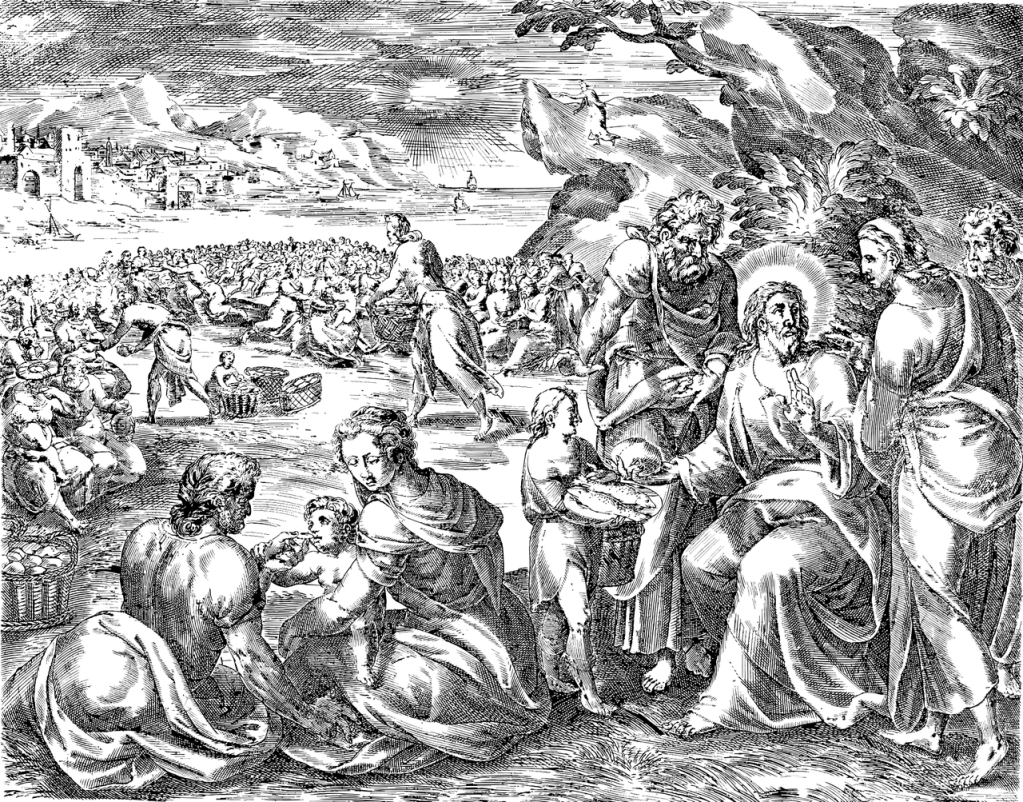
Mission: Impossible
“Is anything too hard for the Lord?” Genesis 18:14
Image by Gordon Johnson from Pixabay
I am old enough to know that Mission:Impossible did not begin with the Tom Cruise cinematic franchise. Originally, it was a television series, making its debut the year I was born (you can look it up, do the math and figure out how old I am, if you are ambitious or just morbidly curious). Starring Peter Graves, and briefly Leonard Nimoy, who went on to gain fame as Mr. Spock in the Star Trek saga, the show followed the exploits of an elite, secret organization, charged with taking on missions that no one else can handle and deemed, well, impossible.
What made me think about this particular show this week? If you have been tagging along since this walk began, you know that I surrendered to God after I hit rock bottom and became an emotional trainwreck. A dark cloud hovered over me, and while it has shrunk, it still looms.
I have prayed about it. I have pleaded and cried over it. I have questioned God about it, and have pleaded with Him concerning it. I have confronted it, ignored it, endured it, and even embraced it. I thought by now it would dissipate. Yet it’s still here, hanging over my head, threatening storms, and darkening everything around me. It sucks all of the light and joy out of life, and getting rid of it, I decided earlier this week, was, well, impossible.
That’s why this post is so late this week. I just could not concentrate, and determining a topic for this week eluded me. I decided to settle on an essay about Michael Wigglesworth’s poem “The Day of Doom,” which sparked an interesting conversation in the American literature class I teach, but then, as I was browsing through fishing videos on YouTube instead of focusing on my writing, I stumbled across an old sermon from Dr. Charles Stanley. The title of the sermon was “When Things Seem Impossible,” and I knew what the topic should be.
What follows is a combination of my observations and Dr. Stanley’s teaching. I hope it helps someone out there, and I hope it helps lift this burden that I have been carrying around for much too long now.
The Bible is full of stories of the impossible. The first two that came to my mind were the stories of Abraham and Moses. Abraham was 75 years old when God promised that his wife Sarah would bear him a son, despite his age and her apparent barrenness. Abraham believed, and he did indeed have that son, 25 years later. Impossible?
In Exodus, Moses is charged with leading the Israelites out of Egypt, the most powerful nation in the world at the time. It was a daunting task at best, really impossible. Yet, it happened, and when the Hebrews were stuck at the Red Sea, with the Egyptian army breathing down their necks, God did the impossible again, parting that sea and allowing His people to cross over unharmed. Impossible?
Dr. Stanley reminded me of another time the Lord did the impossible. As Jesus’ ministry grew, so did the crowds that followed Him, and one late afternoon, some 5,000 men (and that does not include the women and children who were among the multitude) gathered together to hear Jesus teach. That’s when Jesus decided they needed to feed them all, despite the fact that they had nothing but five measly loaves of bread and two lousy fishes among them. Guess what. He did the impossible again.
This miracle, the only one told in all four of the gospels, contains a number of elements we just cannot ignore. I don’t know if I can fit them all in here, but there are a few that stood out to me, and I feel that I have to share them with you.
In Matthew’s account, the disciples tell Jesus, “‘This is a deserted place, and the hour is already late.’” (14:15). It’s at this point, in John’s telling, that Jesus looks around at the crowd, turns to Philip and says, “‘Where shall we buy bread that these may eat?’” (John 6:6). Don’t stop reading there. The next verse tells us “But this He said to test him, for He Himself knew what He would do.”
As I figure it, there are three keys to the beginning of this narrative. First, God will many times allow us to reach a dark place, where we feel abandoned and alone, before He really goes to work. And when He does, He always has a plan. He knows the resources available to Him, and He is never caught off guard.
At this point, Andrew brings in the boy with the bread and fish. Peter’s brother recognizes that this isn’t nearly enough to feed so many people, and he asks, “‘… what are they among so many?’” (John 6:9). Essentially, Andrew asks, what can I do with this? Wrong question. The question should have been, “Lord, what can YOU do with this?”
That’s the question we need to ask. Let’s backtrack to Moses for just a second. Initially, he resisted God’s call to lead the Israelites out of bondage, asking questions like what can I possibly do? God’s answers are important. First, He says, “‘I will certainly be with you’” (Exodus 3:12); then he responds, in a voice I imagine shook the mountain on which Moses stood, “‘I AM WHO I AM’” (3:14).
He is the Creator of the universe, for Pete’s sake! He is the one who designed DNA, which contains a sequence of over a billion letters, all working together to form us. He put the stars in the sky and named them all. HE IS WHO HE IS, and He promised that He would be with those who have accepted His Son as their Savior.
So don’t, like I do, ask Him what I am supposed to do. Ask Him what He is going to do. And trust him, letting go and giving it all to Him.
The little boy with his lunch did. I can see Jesus bending down to him and asking the little boy if he can have that little bit of food. I can see the boy holding out his little hands, barely big enough to hold the loaves and fishes, a look of anticipation in his eyes and a smile on his face. He gave Jesus all that He had, and he was rewarded with a meal for thousands of people, with 12 baskets of leftovers to spare.
So give it all to Him. If you have been redeemed, dive in completely. If you haven’t, don’t try to do it on your own anymore. Surrender, let go of it, and let God take control.
Think about it. He fixed it so that a centenarian could have a child. He freed His people from the mightiest nation in the world. He took a little boy’s lunch and used it to feed thousands of people. And I believe that he can remove clouds that hang over the heads of young Christians. As He told Abraham, “Is anything too hard for the Lord?” (Genesis 18:14).

Endurance
“I have fought the good fight, I have finished the race, I have kept the faith.” (2 Timothy 4:7)
I love sports. I love them so much that I spent a good portion of my adult life dedicated to them, working as a sports writer and photographer for more than a decade at a local newspaper.
In those years, I covered most of the big high school track meets across the state each year. Those were some really long days, always culminating with the 4 x 400 relay, one of the most exciting events at each meet, often determining the winner. Before spectators could see that race, though, they had to struggle through the 3,200-meter run, for both boys and girls, a mind-numbing, sleep-inducing two-mile jaunt.
I remember one of those marathons in particular, not because it was exciting or even competitive, but because for a race that always seemed to take forever to complete, this one was exceptionally long. One of the competitors took nearly 40 minutes to cross the finish line, and she was still circling the track long after the rest of the competitors had completed their circuits. At the time I wondered why she even bothered. She had to know going in that she had no chance of winning. As I look back at that race today, I have to applaud the young lady. She didn’t win; in fact, she came in dead last. But she finished. With each plodding stride, she exemplified the attributes of endurance, perseverance, and tenacity, all things that we as Christians should be striving for each day.
Confession time. I’m tired. I feel like the tank is empty, and I’m running solely on fumes. Weeks of what I think are fervent prayers and day after day of Bible study have, in my limited mind, produced little result. Too many worries and the demands of everyday life have left me exhausted. At times, I have felt like giving up, turning back and abandoning this course set for me.
When I think that way, I have to remind myself that “… there is nothing new under the sun” (Ecclesiastes 1:9). Plenty of other people have experienced those emotions, and some of them were the most godly men ever to walk the earth.
Take the prophet Elijah, for example. If we look at part of his story, which we can find in 1 Kings, chapter 19, we see that he was so tired that he just wanted to die. He was on the run from the evil queen Jezebel, who promised to have him executed, and he felt that he was all alone in the world. He crawled under a tree and begged for it all to end.
Then God directed him to a cave, where an angel brought food and water. Elijah was rejuvenated, and he carried on the mission that God had for him. The moral of this story is that when we are feeling like we cannot go on, we just need to find our way to our private places, and there God will provide what we need to continue His plan for us.
We are human, though, and that is a lot easier said than done. I continue to pray, and I continue to read the Scriptures, but I still feel drained. Sometimes, I question whether or not God hears me, and I, in my weakness, again wonder if I can continue.
Then I think of that girl and that long run she made so many years ago. She had the endurance to keep putting one foot in front of the other, even though she was all alone on that track. She was determined, and we are taught to be just like her.
The writer of Hebrews tells us “For you have need of endurance, so that after you have done the will of God, you may receive the promise” (10:36). In his letter, James says, “Indeed we count them blessed who endure” (5:11). There’s no easy formula for endurance; it takes training and fighting through when it seems like we cannot go on. There are a few things we can do to build that endurance, though.
First, we have to learn how not to worry. Yeah, I know. I might as well be asking to lift the world. But if we don’t control those worries, they lead to bigger problems, like doubt and a real danger of straying away from God. Jesus alluded to this, in a way, in his Parable of the Sower, which you can read in Matthew13. If we take His image of a farmer planting his garden, we can think of our worries as weeds. If we don’t pull them up, they can choke out the seed that has been planted among them. Worry can do the same thing to the seed that has been planted in us. If we worry too much, we lose our focus on God.
We all have problems, and worry is just in our nature. I feel like I am in a constant state of stress, and I think that nothing is ever going to turn out right. If we are truly children of the Lord, however, they will always turn out right, even if that outcome is not the one we might have expected, or wanted. The thing we have to remember is that it really doesn’t matter what we think.
As mere humans, we have no concept of what is going on in the unseen, and we have no way of truly understanding what God is thinking. “For My thoughts are not your thoughts,/Nor are your ways My ways,” God says in Isaiah 55:8-9. “For as the heavens are higher than the earth,/So are My ways higher than your ways,/And My thoughts higher than your thoughts.”
While that may not sound too reassuring on the surface, we find out it is one of the most reassuring verses in the Bible when we turn to Jeremiah 29:11. There the prophet quotes God, who says, “For I know the thoughts I have about you, … thoughts of peace and not of evil, to give you a future and a hope.” That’s a reason for expectation if I’ve ever heard one.
Still, we often have to wait on that hope. God is going to be there for us, but our impatient nature makes it hard to keep believing, particularly in this world of ATMs and Google searches, where almost everything is available at the click of a button.
Abraham knew a thing or two about waiting. God promised he and his wife Sarah a son, and Abraham never lost faith, even though it took until he was a hundred years old for the promise to be fulfilled. David spoke of waiting on the Lord, too, and the rewards that would come for that endurance and patience: “I waited patiently for the Lord;/And He inclined to me,/And heard my cry,/He also brought me up out of a horrible pit,/Out of the miry clay,/And set my feet upon a rock,/And established my steps” (Psalm 40:1-2).
What it boils down to is this: “Watch, stand fast in the faith, be brave, be strong” (1 Corinthians 16:13). That is endurance, and that is what God expects from us.
I remember when that young lady who slogged through that race crossed the finish line, she received a standing ovation. Like the crowd at that track meet that day, God is there cheering us on; He is right there beside us. All we have to do is not give up. Keep putting one foot in front of the other, take it one day at a time, and we too will be able to say, “I have fought the good fight, I have finished the race, I have kept the faith” (2 Timothy 4:7).
Slaying Giants
1 Samuel 17:37: “‘The Lord, who delivered me from the paw of the lion and from the paw of the bear, He will deliver me from the hand of this Philistine.'”
Image by Jeff Jacobs from Pixabay
For the little bit of time that I have been on this journey with Jesus, I have felt like I have been walking in darkness. Yes, I know that’s not how it is supposed to be, but I have had a difficult time shaking off my earthly predisposition to pessimism. I have gotten better; ask anyone who has spent time talking to me over the last several months. However, sometimes I still feel like I am walking in the gloom of some giant’s shadow.
We all have giant’s in our lives, don’t we? It might be a relationship that is falling apart, or perhaps it is financial worries. Maybe it’s an effort to fend off depression or addiction, or maybe it’s an inner struggle as you resist God and His will. Whatever the case, that giant is there, and we stare up at it, unsure what is going to happen next and sure it is going to destroy us.
I have been struggling against my giant for a long time, longer than I realized actually, and in an effort to find a way to topple it, this week I spent some time reading the story of the Bible’s most famous giant, turning to the narrative of David and Goliath. Most of us know the story from our youth, and back then it was a great adventure tale, perfect for keeping fidgety children still as they endured Sunday School. As I look at 1 Samuel, chapter 17 again, I understand that David and the battle with Goliath is a formula for how we can defeat the giants in our lives.
As we look at those giants, they seem so big, colossal even. And so they might be. David’s giant certainly was. How big was Goliath? Samuel tells us that he was six cubits and one span, which converts to just about nine feet tall. His armor weighed “five thousand shekels,” or about 150 to 200 pounds. Heck, just the tip of his spear came in at 15 to 20 pounds. Goliath was a big man, and he wasn’t shy about what destruction he was going to bring upon the Israelites.
As one might expect, everyone who gazed upon this Goliath was terrified. Samuel describes King Saul and his army as “dismayed and greatly afraid” (v. 11). That sounds about right. I stare at my giant, and it frightens me. I shrink from it every day, I don’t want to confront it, and to be honest, I want to run away as fast as I can, sure that it is going to crush me. If only I could face down my giant like David did.
This mere teenager, known best for his ability to take care of a flock of stupid, timid sheep, just happened to be visiting the camp one day, and he was the only person in all of Israel unafraid of the massive Philistine. That should tell us something. If a youth can face a giant, so can we. And if we follow the plan David lays out for us, we can do more than just face those behemoths.
The first thing David did was remember his past victories, and he knew that because of those victories he would win again.. He told King Saul about times he protected his sheep when danger befell them. He said, “‘Your servant has killed both lion and bear; and this uncircumcised Philistine will be like one of them, …’” (v. 36). David was confident he would win because he had done it before.
We need to do that, too. Remember the blessings in your life; recall the past victories in your life, no matter how insignificant they may seem. What’s important, I think, is that you approach this big battle knowing that you can win, understanding that all the little battles have prepared you for this particular struggle.
While David recalled his victories, he also recognized the important fact that he didn’t win them all by himself. As he wraps up his petition to Saul, David says, “‘The Lord, who delivered me from the paw of the lion and from the paw of the bear, He will deliver me from the hand of this Philistine’” (v. 37). David knew he did not kill those beasts without God’s help, and he makes sure to give credit to the Lord. We have to give God credit for our past victories, too. We cannot do any of this alone.
Earlier in this section of 1 Samuel 17, there is, I think, an often overlooked passage. When David is trying to convince the king to let him face Goliath, he talks about how Goliath has “‘defied the armies of the living God’” (v. 36). So, remember your victories; recognize that God helped you win them; and know that God is not dead. He is the LIVING God; His Son, our Savior, rose from the dead. He is alive and well and ready to help us fight our battles.
So, Saul relents and agrees to let this young man go out and fight the seasoned veteran of war. He even outfits the boy with his armor, placing upon David his mail and sword. But the gear is too heavy, and David instead goes to the battlefield as himself, a tiny shepherd boy. “Then he took his staff in his hand, and he chose for himself five smooth stones from the brook, … and his sling was in his hand” (v. 40).
David realized that man’s weapons were not enough to defeat this giant, so he went to war with the weapons God had given him. God has given us weapons as well, chiefly prayer and His Word, but he has also equipped us with a whole suit of spiritual armor: the belt of truth, the breastplate of righteousness, the sandals of the gospel of peace, the shield of faith, the helmet of salvation and the sword of the word of God. Our armor, our weapons may seem puny when compared to the arsenal our giants bring with them, but God tells us that we can use them to “stand against the wiles of the devil” (Ephesians 6:10). They are enough to topple the giants in our lives.
Goliath was armed to the teeth when he went out to meet David, but David did not shrink from the challenge. Instead, he stood face to face with the juggernaut, and after enduring Goliath’s taunts, he responded with confidence. “‘You come to me with a sword,’” the youth responded, “‘with a spear, and with a javelin. But I come to you in the name of the Lord of hosts, the God of the armies of Israel, whom you have defied. This day the Lord will deliver you into my hand, and I will strike you and take our head from you.’” (1 Sam. 17:45-46).
David did two things here. First, he invoked the name of God. He knew, and we should too, that nothing strikes fear into giants like the name of El, Eloah (God “mighty, strong, prominent”); Elohim (God “creator, mighty and strong”); El Shaddai (God Almighty).
Secondly, David knew, absolutely and without doubt, that he was going to win this battle. He fought from victory, a lesson with which I continue to struggle. When Jesus, hanging on the cross after enduring centuries of pain, suffering, and humiliation for us, uttered the words, “It is finished” (John 19:30), he was not just talking about His life as a man coming to an end. He was telling the world that His mission was accomplished. He won the war. That’s the way we need to enter battles with our giants, just like David did, sure that, with God on our side, victory is ours.
After David let Goliath know there was no way the giant could win this battle, he went on to say, “‘Then all this assembly shall know that the Lord does not save with sword and spear; for the battle is the Lord’s, and He will give you into our hands’” (1 Sam. 17:47). Perhaps this is a foreshadowing of the new covenant that would be put in place when Jesus was offered up as a sacrifice, but it is surely David’s acknowledgement of two things: the battle really belongs to God, and when it is over all glory will go to Him.
In Psalm 44:6, which ironically was not written by David, we hear: “For I will not trust in my bow,/Nor shall my sword save me.” In Exodus, Moses tells his people: “‘The Lord will fight for you, and you shall hold your peace” (14:14). Sometimes, and this is extremely hard to do, we just have to give it to God, sit back, and let Him go to work.
That does not mean we don’t do anything. We have to continue praying. We have to keep seeking His face and studying His Word. And there is going to come a time when we have to confront that giant.
When Goliath made his way toward David, the boy “hurried and ran toward the army to meet the Philistine” (1 Sam. 17:48). There will come a time when we must do that too. We will have to meet our giant on the battlefield. If David had wavered, if he had flinched, Goliath probably would have squashed him like a bug. We have to be ready when it’s time to go to battle.
What does that mean? I wish I knew. I’m still praying, still asking God for His direction, hoping to learn more about my battle plans.
I do know that one day – maybe tomorrow, maybe years from now – I will defeat my giant, with God’s help, of course. David did. One of those tiny stones found its mark, knocked Goliath out cold, and then David, as he had promised, chopped off the giant’s head, sending the Philistine army running.
You will defeat your giant, too. When you do, however, make sure to remember the last part of the formula. The glory isn’t yours; it belongs to God. He will be the one that leads the charge; He will be the one who secures the victory. Our job then becomes making sure the world knows that.

Saving Our Rebels
1 Timothy 2:3-4 “For this is good and acceptable in the sight of God our Savior, who desires all men to be saved and to come to the knowledge of truth.”
During this walk, which has been a real test of endurance so far, I have learned some painful lessons. I have learned that I can’t control everything; some things I have to leave in God’s hands. I have learned that I need to rejoice in everything around me, even the bad things, lest I live my life in one long moment of despair. And I have learned that not everyone wants to hear about my salvation.
Just before Jesus ascended into heaven, He told His disciples to “Go therefore and make disciples of all the nations, baptizing them in the name of the Father and of the Son and Of the Holy Spirit, teaching them to observe all things that I have commanded you …” (Matthew 28:19-20). Biblical scholars call it the Great Commission, and that’s our job as Christistians. We are supposed to talk to people about our redemption and the gift that God has given us. Admittedly, I have not been as diligent in that work as I should be, but there are a couple of people I have tried to speak to on a regular basis.
Just recently, however, I was taught that last, painful lesson. I shared my story, the same story I shared in the first blog post, with one of those people. I tried again the next day, and I was told to cease with such talk. This person wanted nothing to do with it, and told me as much. It was like a slap in the face. I know we are told that people are going to reject us; Jesus said, “… you will be hated by all for My name’s sake …” (Matt. 10:22). I never expected this person to be one of those who would turn away, however, and when that happened, I crawled into my shell, saddened by my thoughts that this person was lost forever. My broken heart was shattered again.
When I recovered from the shock and the hurt – rejection is very painful – the Lord, who mercifully allowed me wallow in my sorrows for a little while, directed me to one of the hardest hard cases in the Bible. When I read about him again, I heard Obi Wan Kenobi talking to Luke as they entered Mos Eisley in Star Wars: A New Hope, the original and, as far as I am concerned, best movie in that franchise: “You will never find a more wretched hive of scum and villainy.”
His name was Saul, and while he was supposed to be a man of God, knowing all about the law and at the very least working closely with the Jewish leaders in Jerusalem, he was as hard-hearted as they come. Evidence suggests that he may have been part of the Sanhedrin, that group that led the rally to persecute and eventually execute Jesus. While I don’t know if Saul was on hand for that sham of a trial, I do know he was there when Stephen, one of the men who preached the gospel during that time, was tried unjustly, and Saul was an eyewitness when Stephen was stoned to death.
He may have even led that execution. In Acts we are told that “the witnesses laid down their clothes at the feet of a young man named Saul” (7:58), suggesting that Saul had some standing among the mob. We know that Saul heard Stephen cry out, “‘Lord, do not charge them with this sin.’” (Acts 7:60). More about that later.
After Saul took part in that stoning, he made it his personal mission to persecute every single person who professed Jesus as the Messiah. Stephen’s death caused many of Jesus’s followers to scatter, and Saul became a bounty hunter of sorts, chasing them down throughout the land. Luke, who penned the Book of Acts, tells us that Saul “made havoc of the church, entering every house and dragging off men and women, committing them to prison” (8:3). Later, Luke tells us that Saul may have even had a hand in the murders of some believers. He winds up going to the high priest, asking permission to extend his search into the far reaches of Damascus.
Saul was a hard man, bent on destroying this Christian belief. He was the last person one would expect to be pursued by God, yet he became one of Chrst’s most fervent apostles. How did that happen? The way I figure it, there was a six-step plan for Saul’s conversion.
Many who read Saul’s story will say the plan began on that road to Damascus, an important part of the process to be sure. However, it actually began much sooner, with the stoning of Stephen. Remember Stephen’s last words? A seed was planted that day, and Saul never forgot those words. Dr. David Jeremiah thinks that Stephen’s death, and Saul’s part in it, haunted Saul, noting that the name Lord is mentioned nearly 300 times in the New Testament letters, recalling Stephen’s merciful pleas for those who killed him.
That was the seed, and even though it fell on the stony ground Jesus spoke about in the parable of the sower, this one did take root. We have to plant those seeds. God will use them, and if we don’t, there is no chance anything will grow.
The road to Damascus was step two for Saul. Sometimes the hard-hearted need to have a personal encounter with God, and that’s exactly what happened to Saul. As he traveled to Syria, a bright light suddenly appeared before him, and he heard Jesus speak: “‘Saul, Saul, why are you persecuting Me?’” (Acts 9:4).
There is a key to these personal encounters working, though, and it relies upon the person to whom God appears. Paul responded. He asked who was speaking to him. If he hadn’t done that, the plan might have ended right there; God will not suffer continuous rejection. But when Saul did respond, Jesus revealed Himself.
Does Jesus still appear to people? I think so. He may appear as Himself, or perhaps He will send one of His angels or maybe even someone who was a believer in life and close to the rebel. He may use others to do His work. Whatever the case, the hard-hearted sometimes need that supernatural encounter with Christ, just like Saul needed.
These people most times need a humbling experience, step three. For Saul, it was being struck blind. Physically, there may not be anything more humbling than losing one’s sight. Try to imagine what Paul suffered when that bright light struck him blind. Here was this virulent man, confident in everything he did, even arrogant in his beliefs and what he saw as his good work. Suddenly, he could not do anything on his own. He had to be led around by the hand; he could not even feed himself, going three days without any food. He was completely helpless.
The same thing might have to happen to that stony non-believer. There is going to come a time when he or she is knocked off that pedestal. It happened to me. I had to reach a point when I realized that I could not do things on my own anymore.
Sometimes, unfortunately, the humbling is painful, particularly for those who really fight with God. For Saul, he spent those days of blindness unable to care for himself any longer, and while I am not sure, I think that was the time he developed that “thorn in the flesh” he talked about so much, whether it was his conscious that plagued him for his past persecutions or some physical ailment the developed while stumbling around in the dark. The same thing happened to Jacob, a noted con man and liar, who had to spend the rest of his life hobbling around on a bum hip after wrestling with Jesus.
The same thing will happen to our rebels. That pain, whether physical, emotional, or spiritual, will constantly remind them of their past transgressions and, hopefully, cause them to cry out to God as they realize that He is their only true hope.
When they do this, they will realize the next part of the plan: the mission. While Saul was languishing in his blindness, Jesus appeared to a man named Ananias. Jesus told the disciple to help Saul, saying, “‘…he is a chosen vessel of Mine, to bear My name before Gentiles, kings, and the children of Israel’” (Acts 9:15). The Lord had a plan for Saul, just as He has a plan for the rebels in our lives.
Before we go any further, let’s talk a bit about Ananias. He was chosen, too, not just as the one who would assist in Saul’s healing, but also as one of those who would help prepare Saul for his mission. Be ready, for you will probably be called for the same duty, asked to serve as a guide for your hard-hearted person as he or she realizes the mission.
Finally, Saul was renewed, and his renewal came in the form of a name change. Later in the Book of Acts, Luke refers to him as Paul. We don’t know if this was a divine event, like Simon becoming Peter or Jacob becoming Israel, and we don’t know if it was just a protective measure. It is certain that Paul was hunted once he began his ministry. Whatever the case, Paul was a new man, and there is no other reference to his former name. The same thing can happen in your rebel’s life.
So what’s our role in God’s plan? I wish I had a sure answer. Part of me wants to scream at my rebel, shouting, “Open your eyes!” Another part of me feels that I should stay still and leave God to His work. I do know I have to keep praying for my rebel. I must continue to seek God’s guidance, for when I “acknowledge Him,/… He shall direct my paths” (Proverbs 3:5-6).
That’s reassuring. It’s also reassuring that God wants this rebel to receive His gift of salvation. It’s not surprising that Paul, the ultimate example of a rebel brought to redemption, tells us in his first letter to Timothy: “For this is good and acceptable in the sight of God our savior, who desires all men to be saved and to come to the knowledge of the truth” (2:3-4).
So don’t give up hope. Take comfort in the knowledge that God wants the same thing we do, and He is going to do everything in His power, which, by the way, is infinite, to bring your rebel home.
I’m not giving up on my rebel. It is likely going to take a miracle, but miracles are God’s business. My rebel must be willing to accept His grace, something I can’t control. I have hope, though, knowing that “‘With men this is impossible, but with God all things are possible’” (Matt. 19:26).

Walking on the Water
Matthew 14:28 “Peter answered Him, and said, ‘Lord if it is You, command me to come to You on the water.’
“So He said, ‘Come!’ And when Peter had come out of the boat, he walked on the water to Jesus.”
One of the hardest lessons to learn as a young Christian, at least for this young Christian, is that we can walk anywhere we want. We can push our way through valleys and climb to the top of mountains. We can tread on serpents, and we can walk on water.
Peter did, sort of.
That headstrong disciple is my favorite biblical figure, I think. Though lately I have identified with Thomas, questioning almost everything as I wait for God’s plans to come to fruition, there’s something about Peter. He was rash and often had to be put in his place, full of enough warts for all twelve of Jesus’ closest followers. Despite all of his flaws, he was the Rock, a leader upon whom Jesus said He was going to build His church.
One of my favorite accounts of Peter appears in Matthew 14. Anyone who has spent even a little bit of time in Sunday School knows the story of Peter trying to walk on the water to Jesus, only to sink in the waves when he seems to lose his faith. That’s the general take of the narrative, but if we look at it verse by verse, it becomes a series of valuable lessons for all of us as we take this journey with Jesus.
Events begin just after Jesus feeds the 5,000 and sends his disciples ahead to the other side of the Sea of Galilee. He, meanwhile, climbs a nearby mountain to pray, where he remains until about three in the morning. Meanwhile, three or four miles into the boat ride, the wind begins to blow fiercely, and for every foot the disciples creep forward, they are blown back four or five. They are getting nowhere, and Jesus watches their struggles from his perch until He decides to go to them some three hours later.
LESSON 1: Jesus knew all of this was going to happen, and He let it happen to his closest followers. In fact, He sent them out on the Sea of Galilee, which was prone to sudden storms. At the same time, He let them battle those winds for a while before coming to their rescue.
He is going to do the same thing for us. We’ve discussed this before. He knows winds are going to blow in our lives; he knows that we are going to experience frustrations. He will let us struggle with them, knowing that if he comes to our aid too soon, we might forget that He was the one who interceded for us.
Jesus does indeed come to help the disciples, and he does so, as Matthew says, “walking on the sea.” They are terrified. Jesus calms them, though, speaking loud enough to be heard above the roaring winds, “‘Be of good cheer! It is I. Do not be afraid.’”
LESSON 2: Jesus is going to be there for us. It might not be as we might expect, just as I’m sure the disciples did not expect to see him walking on the water. Even when the winds in our life are blowing hard and the waves seem to be swamping our boats, He is there. And He will be walking ON the waves. We don’t have to be afraid.
At this point, Peter cries out to Jesus, and it’s important to understand just what Peter says. “Lord, if it is You, command me to come to You on the water.” Jesus’ answer is simple: “Come!” And lo and behold, Peter steps over the rail of the boat, and he walks on the water, too!
LESSON 3: Jesus wants us to brave the storms. In fact He commands us to, just like He commanded Peter to step out of the boat. He wants us, He commands us, to tune out the winds. So, when Peter put his feet into the water, he was, most importantly, listening to Jesus. As much as this was an act of faith, it was an act of obedience.
As a fisherman, Peter had faced his share of storms on that lake. He knew how dangerous the waves had become, and I’m sure he knew of a number of men who had lost their lives on nights just like this one. For him to step out on that water was no stunt. I can imagine Jesus standing there in the midst of that turmoil, hand outstretched and smiling from ear to ear as Peter obeyed, and actually began walking toward Him.
He says the same thing to us. Trust Him, he tells us; walk to Him, and we can tread on the waves that arise in our lives, too.
That’s why many of us fail to rise above those waves. We do not obey the Lord, and when we do that, we are going to sink, just like Peter.
It is at this point that Peter becomes aware of the winds again, and that is when his focus shifts. Instead of concentrating on Jesus, who is beckoning His disciple to continue his walk of faith and obedience, Peter begins to think about the “boisterous” wind. His faith wavers, and he begins to sink into the dark lake.
LESSON 4: It’s fairly obvious isn’t it? Take your focus off of Jesus, and you are not going to make it through the waves. Dr. David Jeremiah, noted pastor and author, put it best, I think. He said: “What people focus on becomes magnified, especially in fearful circumstances. Whenever believers divert their eyes from Jesus in the midst of a storm, their circumstances assume prominence, and they, like Peter, lose heart and begin to sink. The difference between fear and faith is focus.”
This is a lesson God has been trying to teach me since the first day of this trip with Him. I feel like I am rocked by waves and wind on a daily basis, and I find that too often I think too much about the struggle.
I have a good friend (I will call him Jason, well, because that’s his name) with whom I used to coach baseball at our local high school. We were sort of the coaches’ version of good cop, bad cop. Jason was the one who always exhibited a positive attitude, trying to remain upbeat all the time. I was the half-glass empty guy; I was so bad that Jason often joked that for me there was no glass. It’s not that inaccurate. I always see the bad side of every situation, always expect the worst possible outcome. I’ve had a hard time shaking that mentality, and sometimes it overtakes me even now.
One particular day, I was walking the dog around the yard, overwhelmed by feelings of sadness, rejection, loneliness. I had slipped back into that old way of thinking, and I was reminded of Peter’s ordeal. In the back of my mind, I heard that still, small voice say, “Eyes on Me, Chris! Eyes on me.” That’s my mantra now, and when I start feeling down, I try to remind myself to keep looking up, for if I don’t, I am going to sink like a stone.
Peter does, and when he feels himself beginning to sink, he cries out to Jesus for help. Guess what Jesus does. He reaches down and pulls his friend out of the surging water. That’s LESSON 5, in case you missed it.
When Jesus lifts Peter out of the lake, He delivers the rebuke: “O, you of little faith, why did you doubt?” I imagine Jesus is a little disappointed in Peter, but He probably is a little frustrated, too. Peter and the other disciples had just seen him feed 5,000 men (not including the women and children) from just a few loaves and fishes, yet they still had not developed enough faith to believe they could walk on the water with him.
LESSON 6: On the surface, the lesson is easy to pick up here. If we call out to God, He is going to lift us out of the chaos. If we have faith, He is going to save us, redeem us, make sure we are safe.
But what if we dive into this a little deeper? What if Jesus’ rebuke wasn’t solely aimed at Peter? What if He directed it at the other disciples?
Think about it. They cowered in the boat while Peter braved the surging sea. They were too afraid to take the plunge. At least we have to give Peter credit for trying, for daring to obey Jesus’ commands, and for taking at least a few tentative steps toward his Lord.
God did not call us to sit shivering in the perceived protection of that boat. He wants us to dare to trust Him. He wants us to walk out on those waves, for it is in the middle of those swells that we should be doing our work. That’s where we find those who are lost, and it is only by braving the winds that we will ever complete our walk to Him.
Matthew’s account of this story ends with Jesus climbing into the boat and the howling winds subsiding. He will calm the storms in our life when we allow Him into our lives. As I read this again, breaking it down line by line, I understood the lessons, but that also raised some questions, some of which may apply to you as well.
Where is your focus? Are you paying attention to Jesus, or are you absorbed by the winds that blow around you? Are you willing to trust Him, daring to take the chance to walk ON your waves instead of sinking under them? Can you even see Jesus walking on the water?
If you can’t see Him, then it’s probably time to start looking for Him. He is out there, hand outstretched, asking you to “Come!” The winds don’t stop by themselves, and if you wait too long, the waves can engulf you.
Remember: “Eyes on Him!”

But …
Romans 6:23 “For the wages of sin is death, but the gift of God is eternal life.”
I love words. I have loved them as long as I can remember.
One of my first memories is sitting on the floor of the cramped, little trailer that was our home for many years as my mother did the laundry, so proud of myself for sounding out the word surprise all by myself. I also fondly recall parking myself in the hall outside my sixth-grade classroom, penning my first short story, a not-so-good science fiction tale about an invasion from outer space and a young boy’s attempts to thwart the alien horde.
Words. I love everything about them. I love exploring their origins, and I love figuring out how they work in sentences. Heck, if I could get paid to diagram sentences, I would be the happiest guy on earth. I love trying to figure out how writers manipulate words to get the maximum impact. Sometimes, and don’t laugh at me for this, I just sit down and read the dictionary. No. Really.
OK. I’m a nerd; I admit it. Think about the power that words have, though. They can influence elections; they can make you laugh; and words – and sometimes the lack of them – can cut to the quick. Words are powerful.
And I love them. Big, small, I can’t get enough of them. While our vocabularies have diminished to just around 9,000 words for the average person, down from more than 25,000 back in the late 1500s, we don’t have to be Ernest Hemigway to understand their impact.
Take the conjunctions, for example. (OK. Quick grammar lesson here. The conjunctions are connecting words, joining things of equal rank. For more on how you can use them, look up the old School House Rock cartoon “Conjunction Junction.”) Most of the conjunctions are just tiny little things, no more than three letters. They are powerful, though.
Let’s look at the conjunction but. It’s not really big, again, just three letters. It doesn’t conjure up images of high intelligence. Boy, does it pack a wallop, though.
I’m not going to bore you anymore with etymologies and such. Suffice it to say that but signifies a shift, a change in direction that often can be extremely radical.
As Christians, this little word should mean a lot to us, for that’s what our lives are all about now. Just listen to the lyrics of that favorite hymn Amazing Grace: “I once was lost BUT now I’m found.” That’s what this life, this journey, is all about: BUT. Don’t confuse this with regret as in “I wanted ice cream, but I got spinach instead.” This is a shift, a change, something new and different.
The word is used more than 4,000 times in the Bible. I set out to find every one of its uses (Told you I was a nerd). I stopped when I found three verses that really jumped off the page. The first comes from Matthew 19:26 (NKJV): “… with men this is impossible, BUT with God all things are possible.” See the shift? We can’t do this thing called life, at least not well and with a successful conclusion, on our own. We can’t overcome life’s problems by ourselves, BUT we can if we have God on our side. He can do the impossible.
How do I know this? That takes us to the second verse, from 2 Timothy 1:7. “For God has not given us a spirit of fear, BUT of power and of love and of a sound mind.” The writer takes some grammatical liberties here, but the premise is there. We once again get a radical shift, from fear to power, to love, to a sound mind.
I can identify with this. If you have been with me on this entire journey, you will remember the first blog post, in which I alluded to a moment in my life when I reached what was surely my lowest point. I felt like Macbeth, the title character from one of William Shakespeare’s tragedies. Macbeth became king of Scotland after assassinating the former ruler, and that set off a string of murders and his slow descent into madness. At one point, he tells his wife, “O full of scorpions is my mind …” (Act III, scene ii, line 36).
That’s how I felt. Giant arachnids crawled around my head, stinging me with their enormous tails, driving me to the point where I thought I was going insane. Along came the Great Exterminator, though, and he cleared the beasts from my mind. Every now and then, a straggler finds his way back into my head, BUT God shows up for a follow-up appointment. I have gone from that spirit of fear, afraid that I was going crazy, afraid that I was losing everything dear to me, to a spirit of power, of love, of a sound mind. I never could have done that on my own, BUT God did the impossible.
If I had continued down that same road, I am sure I would have died, maybe not physically, but certainly emotionally, and definitely spiritually. Being wrapped up in my own problems, I never thought about it before; there are many people who feel the same way. They think they are dying. Unfortunately, that is the future for everyone who does not make that radical shift.
That’s a good segue into our final verse, Romans 6:23: “For the wages of sin is death, BUT the gift of God is eternal life.” Nonbelievers look at this verse and immediately reason that God is cruel. No. He is just. We have all fallen short of God, and we all have sinned against Him. It’s part of our DNA. Therefore, we don’t deserve his presence, BUT we can get there if we accept the gift he has for us.
That’s right! He’s giving salvation away. Well, that’s not entirely true. BUT His Son, Jesus, paid the ultimate price for us, suffering and dying on that cross so that our debts would be paid in full. Salvation is free for us now; all we have to do is ask for it.
If you do, you are going to experience the most radical shift. You are going to have that BUT moment, and you are never going to feel the same.

Fighting the Good Fight
Romans 8:18 “For I consider that the sufferings of this present time are not worthy to be compared with the glory which shall be revealed in us.”
When I was a teenager, my pals and I spent much of our time traipsing around the woods near my house, exploring the area we affectionately called “The Halla.” That’s hollow for those of you who did not grow up in south-central Virginia. It was an expanse of mountain that was home to a shooting range, the city’s old reservoir, and a group of teenage boys who let their imaginations run wild.
Our summer excursions often included overnight camping trips, and we would trudge up the access road to our favorite campsite, a clearing near that old reservoir. It was perfect. A ring of trees surrounded an open area, and the sound of the creek as it gurgled by screamed adventure. It even came complete with jagged rocks that dug into your back as you pretended to sleep.
Getting there was pretty simple: follow the road, cross a couple of creeks, and you were there, no worse for wear, except for the few moments needed to catch your breath after the slightly uphill climb and the itchy bites from the army of insects that swarmed around you. But make the trek at night, as we usually did, most of the time without a flashlight, and the road became a path full of booby traps. It was common to trip on the rocks that litter the path, and we nursed more than one twisted ankle. Crossing the creeks often resulted in splashes as adventurers plunged into the black water. Getting to our destination on those nights was difficult, but it was worth it. The memories we made on those camping trips are priceless.
I am reminded of “The Halla” as I proceed on this new journey. I’ve only been on this walk for a few weeks, but, man, oh man, has it been hard. Of course, I have to deal with the usual temptations, and I battle doubts every day. However, other, more sinister, rocks have been placed in my path, making the start to my spiritual excursion extremely difficult, and I would be remiss if I didn’t admit that more than once I have thought about turning back.
God never promised it was going to be easy, though. In fact, He warns us that this walk is hard. In his Gospel, John quotes Jesus as saying, “In the world you will have tribulation …” (16:33, all verses from the New King James Version). Jesus also told his disciples that “difficult is the way” (Matthew 7:14) when we choose the narrow path.
Being human, we naturally ask the inevitable question: Why? Why would God, if He is so good and He loves us so much, allow tribulations and suffering come to those who serve Him? It’s a difficult question, asked by believers and nonbelievers alike, and the way I see it, there are two answers.
The first has nothing to do with God. When we give our lives to Christ and enter that narrow gate, we enter a warzone where a spiritual battle is being waged. The enemy will try anything in his power to knock us off this path. Listen to many religious figures, and they will tell you that the devil has no teeth today, or, even worse, he doesn’t even exist. But the Bible tells us that Satan is like “a roaring lion, seeking whom he may devour” (1 Peter 5:8). He wants to destroy everyone, but his most vicious attacks are going to be aimed at Christians.
I know this first hand. While I will not discuss specifics, since May, things have happened in my life designed for the sole purpose of destroying my family, and, as a result, my faith. Those attacks continue to ramp up, causing my doubts to increase and attempting to drive wedges between me and the ones I love. What do we do when we are assaulted by the opposition?
We don’t have to despair. Ready for some good news? Satan can’t win! The outcome of this battle has already been decided. Jesus tells us in the second half of that verse from John to “… be of good cheer. I have overcome the world.” While it’s not easy (but we already knew that), we can fight off those attacks. “Submit to God,” James tells us. “Resist the devil and he will flee from you” (4:7).
That doesn’t mean the attacks don’t draw blood. They often do, and they hurt. They can be discouraging, and they can absolutely make your faith waver. We have to remember, though, that “even the demons believe [in God] – and tremble” (James 2;19). We also have to keep in mind that “the God of peace will crush Satan under your feet shortly” (Romans 16:20).
Sometimes, however, God does allow trials to befall us. And we should be happy about that.
I know what you are thinking. Why should I be happy that the world around me seems to be crumbling? Why should I be happy about COVID and the havoc it has wreaked? Why should I be happy that my relationships are falling apart? Why should I be happy that I don’t know how I am going to pay these bills? Why should I be happy about hurting so much? Give me a chance to explain.
When we look at Paul, the apostle formerly known as Saul, who was responsible for the torture and murder of many of the early Christians, we find that he had a rough go of it after his conversion on the road to Damascus. He was thrown in prison; he was shipwrecked; he was beaten. And the list goes on. Yet, despite all of these troubles, nay, because of all of these troubles, he was one of the most joyful people on earth. He even said that he “gloried” in his tribulations.
On the surface it doesn’t make a lot of sense, but in Romans 5:3-5 Paul tries to explain “that tribulation produces perseverance, and perseverance, character, and character, hope. Now hope does not disappoint …” Still not convinced?
Consider your troubles a test. Better, yet, think of them as a workout. God sometimes allows these things to happen to us as a way for us to get stronger in Him, to get closer to Him while, as one writer whose name escapes me said, we build our spiritual muscle.
Does it work? When I was hit hard recently, I spent most of my time studying the Bible, and I prayed … a lot. I also spent as much time as I could with fellow believers, including my father.
My father is the most godly man I know, the very model of what a Christian should be. And when I sat down with him to talk about my troubles, I felt an instant sense of peace. I left his house engulfed in a serenity I had not felt before. Did my troubles end? Did I lose those doubts and fears? Not entirely, but by diving into God’s Word, praying, and talking with other Christians, I have begun to deal with those troubles better; the periods of peace are getting longer. If that’s not getting stronger, I don’t know what is.
And that’s why Paul says we should rejoice in our sufferings. He urges us to “take pleasure in infirmities, in reproaches, in needs, in persecutions, in distresses, for Christ’s sake. For when I am weak, then I am strong” (2 Corinthians 12:10).
Still sound crazy? Think about it. When we are hurting, we cry out to God. Because we think we are lost or we are stumbling over the rocks placed along our darkened path, we find light in the Word. We engage in a spiritual workout, building those spiritual muscles and becoming stronger through our Savior.
And in the end, what do these earthly trials really matter? “… the sufferings of this present time are not worthy to be compared with the glory which shall be revealed in us,” Paul says (Romans 8:18). And he adds, “We know all things work together for good to those who love God,” (8:28). We have a reward waiting on us that will exceed any pitfalls we may encounter, and when we do encounter them, we can be assured that God is going to make it work for good and His glory.
The path is going to be rocky, folks, that I can guarantee. But we don’t have to walk it in the dark. We have a flashlight waiting to be turned on, and when we do, we will make it to that campsite waiting for us at the end of the road.
A Love Poem
John 3:16 “For God so love the world that He gave His only begotten Son, that whoever believes in Him should not perish but have everlasting life.”
A Love Poem
One of the most valuable lessons I have learned since starting this journey is that God loves us … even me. He loves us so much that He sent His only Son, Jesus, to earth to serve as the ultimate sacrifice, and Jesus loves us so much that He willingly took on human form, complete with the blessing, or curse, to suffer human emotions and feel human pain.
Once upon a time, I considered myself something of a poet. My lyrical skills have deteriorated somewhat after a season of neglect, but here is my poetic take on God’s love … and what it has done for me. Sorry for the length.

And the Journey Begins
Ephesians 4:1 “I, therefore, the prisoner of the Lord, beseech you to walk worthy of the calling with which you were called, …”
And the Journey Begins
Let me start with a little disclaimer. I am a work in progress. I am far from perfect, as my wife will surely confirm, and I stumble every day. Heck, it seems like I fall every hour.
I grew up in the church, attending a number of them during my formative years. When I was a young child, I attended the family church, where all of my aunts and uncles on my mother’s side spent their Sundays. I remember Sunday School there, taught by my aunt, of course, and singing all of the old hymns and children’s songs. I still see her flipping the chart as we sang “How Great Thou Art,” and what child didn’t love clapping hands and stomping feet along with the strings of “If You’re Happy and You Know It?”
After that, we started following my pastor grandfather around, first to a little, and I do mean little, church in the backcountry of rural Virginia. I hated when the urge would hit me, for the only restroom was a smelly old outhouse near the creek that bubbled past the rear of the building. And I swear I remember a time one of the local boys rode his horse into the tiny sanctuary, leading that beast all the way up to the altar.
From there we graduated to a slightly bigger church, though still tiny, with maybe fifty people there on a good Sunday. I still think fondly of the people there, many of whom are no longer with us. That’s where my mother developed an obsession with puppets, and playing the role of Bus Driver, I got to recite the first lines of the Christmas play one season. Amazingly, I still remember the lines, even all these years later: “All right! All right! I know it’s cold, and I know it’s Christmas. But I ain’t Santa Claus, and I ain’t got no magic wand.” Good times!
Finally, my teenage years were spent in a much bigger church in my hometown. I was pigheaded, free-spirited, all-knowing … you know, the typical teenager. It was easy enough to get lost in the big congregation, and often my Sundays were spent hiding in the back alley, sneaking pinches of snuff, and running from the deacons, who were determined to catch us skipping church. We ran away, of course, wondering aloud why those guys were out of church themselves, and I kept on running.
I always knew there was something missing in my life, but I always ran away from the answer I knew, deep down, was there for me. I tried everything, all the outlets people seek when they are looking to fill the void in their lives. It worked, for a while, but recently, that emptiness began to overwhelm me. It all came to a head just a couple of weeks ago. It was a Friday, and I found myself sitting behind the big desk in my classroom (I think I forgot to mention that I am a high school English teacher by trade). Events of the last two years, which I will not share with you, at least not at this time, had begun to take their toll. For most of that day, I did nothing but cry.
That’s not like me. I can probably count the number of times that I’ve had a real gully-washer on one hand; even at my mother’s funeral I shed just a handful of tears. But this Friday, I sat behind a locked door and bawled, not a little sniffle here and there, but genuine, bonafide sobs, with tears pouring down my face like rain. I had suspected that I was suffering from a severe depression. That Friday solidified the thought. The emptiness inside of me was overtaking me, and I was sure I was on the brink of losing my mind. I didn’t know where to turn.
Then I remembered. I remembered all of those churches. I remembered that I once had a thought, seemingly out of nowhere, that I was supposed to write a book about the apostle Peter. I even started writing the book once, but I never had the stamina to get very far. As I sat in my chair that day, crying uncontrollably, my mind filled with a debilitating fog, thoughts of those churches, thoughts of that book, flooded my mind. I realized the thing I was missing was God.
I decided to stop running. I talked to a very good friend, whom I thank God for every day, and as we prayed together, I gave my life to the Lord and surrendered all of my problems to Him. I wish I could tell you that all of my problems were solved after that. They weren’t. I still feel like I am besieged on all sides. I still struggle, and sometimes I feel like taking off on a sprint again.
I am a work in progress. But I pray every day that God will guide me. I pray that Jesus will walk along with me. I pray that the Holy Spirit will fill and comfort me. I am searching for, like the old hymn said, that closer walk with Him. I am on a journey.
Follow My Blog
Get new content delivered directly to your inbox.
 The Walk Now